
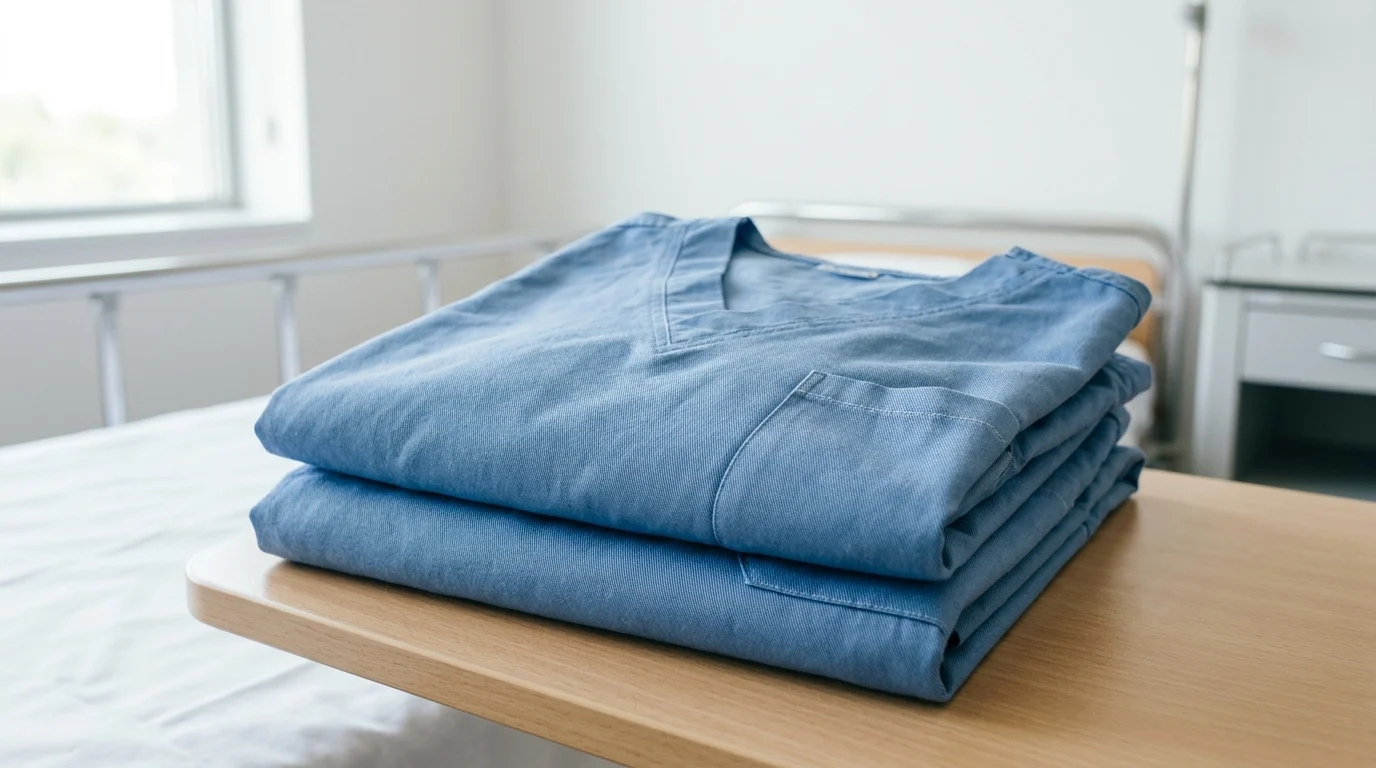
Why Hospital Uniform Fabric Matters
Procurement in the healthcare sector requires strict adherence to technical specifications, particularly when sourcing hospital uniform fabric. It is important to clarify that standard hospital uniforms, such as everyday scrubs, are functionally distinct from surgical or barrier personal protective equipment (PPE). While standard uniforms provide baseline hygiene and professional identification, specialized barrier textiles serve as critical defenses for infection control and occupational safety.
Because these textiles are subjected to rigorous daily use and aggressive sterilization protocols, understanding the foundational properties of medical-grade fabrics is essential for hospital administrators, textile manufacturers, and uniform suppliers.
How to Define Medical Wear Fabric
Medical wear fabric is technically defined by its physical resilience, chemical resistance, and barrier properties. Unlike conventional retail apparel, textiles engineered for healthcare must withstand rigorous cleaning. However, requirements vary regionally: North American institutional buyers often rely on industrial laundry services with thermal disinfection cycles typically ranging from 75°C to 85°C, whereas many European contexts involve staff-purchase and home-laundry models. This difference fundamentally affects the required fabric durability and structural engineering.
Beyond durability, defining these textiles involves assessing their fluid resistance and antimicrobial capabilities. Fabrics intended for surgical or high-risk environments are often treated with specialized finishes that repel blood, lipids, and other bodily fluids. When evaluating antimicrobial finishes, buyers must consider regulatory compliance—such as EPA and FDA requirements in the United States or the Biocidal Products Regulation (BPR) in the European Union. It is crucial to note that some healthcare systems now limit routine antimicrobial textiles due to contact dermatitis and antimicrobial resistance concerns. Furthermore, regulated biocide finishes can degrade with industrial laundering, meaning lab results alone do not guarantee clinical longevity. The baseline criteria for these materials prioritize functional protection and dimensional stability, though buyers must also account for wearer comfort and skin-friendly, hypoallergenic properties, such as those certified by OEKO-TEX Standard 100.
Commercial Risks of Poor Fabric Standards
Failing to implement and verify strict fabric standards introduces substantial operational risks. Substandard textiles are highly susceptible to excessive shrinkage and color degradation. If a hospital uniform fabric exceeds general industry shrinkage tolerances—sometimes benchmarked around 3% to 5% depending on the specific AATCC or ASTM testing methods applied—the garments quickly become unwearable.
Additionally, poor colorfastness—such as a rating below 4.0 on the AATCC grayscale for washing—results in a degraded, unprofessional appearance that compromises the institutional image. Deficient tensile strength or inadequate pilling resistance also leads to micro-abrasions in the fabric, which can trap bacteria and compromise the hygienic environment. Investing in unverified fabrics ultimately exposes an institution to both safety hazards and rapid material failure.
Key Hospital Uniform Fabric Standards to Compare
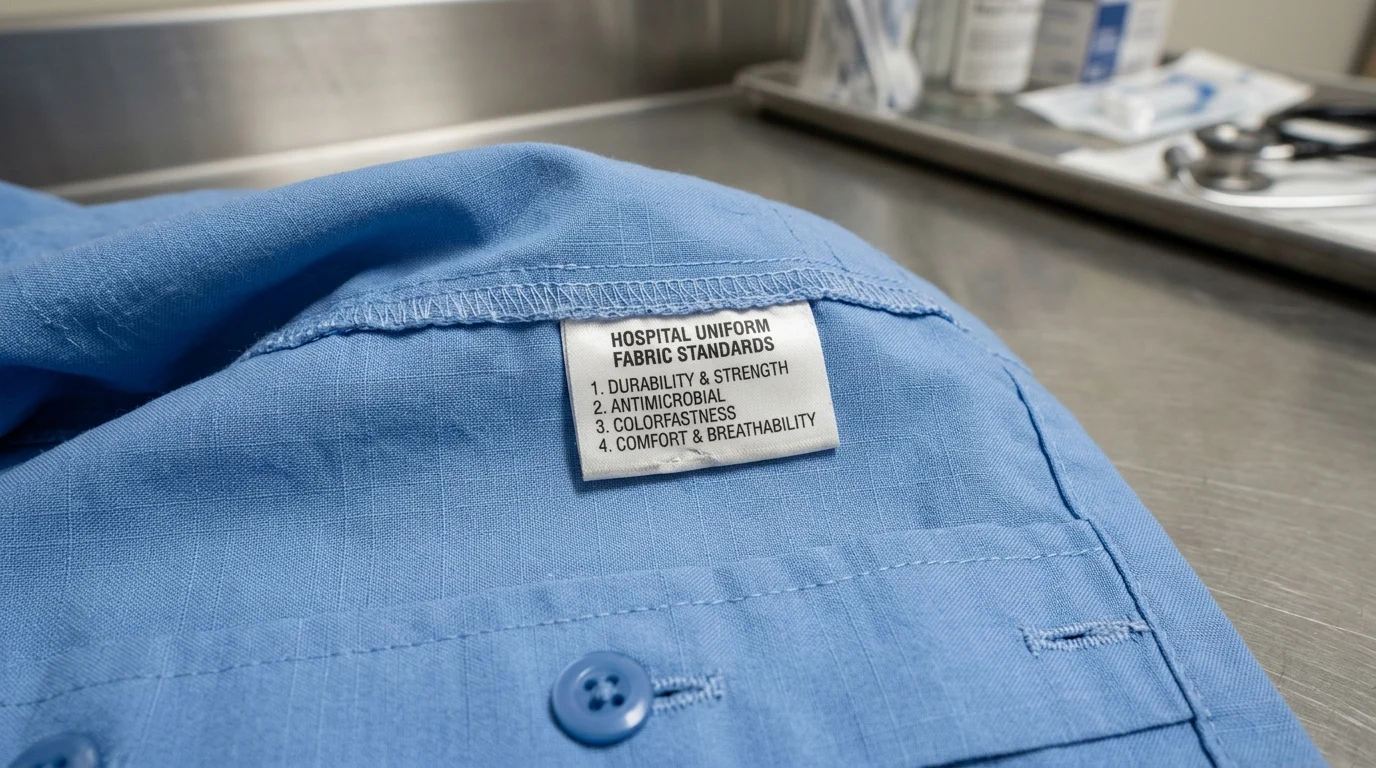
Comparing hospital uniform fabric standards requires a systematic evaluation of fiber blends, structural engineering, and standardized performance metrics. Establishing precise material specifications ensures that uniform programs deliver consistent protection, comfort, and longevity.
Fiber Composition, Weave, and Knit Structure
The performance of medical apparel is fundamentally dictated by its fiber composition and structural design. Standard 100% cotton provides breathability but lacks the durability and fluid resistance required for intensive medical use. Consequently, the industry heavily relies on synthetic and semi-synthetic blends, as well as traditional cotton-polyester blends widely used in North America for their balance of comfort and industrial wash durability. Buyers must carefully weigh the environmental impacts and potential breathability trade-offs of synthetic materials. For instance, commercial products such as specialized synthetic twill blends offer an optimal balance, where polyester ensures durability, rayon provides softness, and spandex enables essential mobility.
Alternative compositions are increasingly popular for specialized clinical roles. Commercial options like woven bamboo-polyester blends leverage the moisture-wicking and odor-control properties of bamboo-derived fibers. However, buyers should note that most “bamboo” fabric is chemically processed into viscose or rayon, meaning these benefits rely on manufacturing processes rather than purely natural states. The weave or knit structure further dictates performance; dense twill weaves offer superior tear resistance, while poplin weaves provide a lighter, crisper finish.
| Fabric Composition | Typical Weight (GSM) | Stretch Type | Key Performance Benefit |
|---|---|---|---|
| 65% Poly / 35% Cotton | 140 – 170 | Mechanical | Classic durability, breathable, withstands high-heat laundering |
| 72% Poly / 21% Rayon / 7% Spandex | 180 – 210 | 4-Way | High durability with maximum ergonomic flexibility |
| 95% Poly / 5% Spandex | 150 – 160 | 4-Way | Lightweight, fluid-resistant properties |
| Bamboo / Polyester Blend | 140 – 170 | 2-Way / 4-Way | Superior breathability and natural odor control |
Performance and Safety Test Criteria
To validate these compositions, buyers must rely on standardized testing criteria. Liquid barrier performance for surgical protective apparel is typically measured against AAMI PB70 standards, which classify garments into four levels based on their resistance to water penetration and hydrostatic pressure. Crucially, AAMI PB70 classification depends on full garment construction (including seams and closures) and testing protocols, not fabric composition alone. Therefore, a 95% polyester and 5% spandex blend does not automatically imply fluid-barrier protection. Everyday medical wear is instead guided by general apparel durability standards—such as ASTM D5034 or ISO 13934-1 for tensile strength. While standards like EN 14362 are critical in Europe, they specifically govern restricted azo dyes rather than broad workwear performance.
Antimicrobial efficacy is governed by standards such as ISO 20743, which quantifies the fabric’s ability to inhibit bacterial growth over repeated wash cycles. Physical durability is assessed through standardized pilling and abrasion tests (e.g., ISO 12945 or ASTM D3512). A premium hospital uniform fabric generally targets a high pilling resistance grade, often cited around 3.5 to 4.0 after extended cycles. Weight consistency is also strictly monitored; for example, commercial four-way stretch polyester-elastane fabrics engineered at exactly 160gsm ensure the material is robust enough to withstand industrial washing while remaining lightweight enough to prevent heat stress in clinical environments.
How Buyers Should Select Hospital Uniform Fabric
Procurement managers and institutional buyers must implement comprehensive sourcing strategies to secure high-quality hospital uniform fabric.
Key Takeaways
- Specify whether the garment is for everyday clinical wear or barrier PPE, because each use case requires different fluid-resistance and protection standards.
- Choose fabrics proven to withstand industrial laundry temperatures of about 75°C to 85°C when uniforms will be processed through hospital laundry systems.
- Set shrinkage limits near 3% to 5% and verify them through recognized AATCC or ASTM testing before approving bulk uniform production.
- Require washing colorfastness of at least 4.0 on the AATCC grayscale to reduce fading and preserve a consistent institutional image.
- Evaluate antimicrobial finishes carefully, since regulated biocides may degrade during laundering and may be restricted due to dermatitis or resistance concerns.
- Prioritize verified tensile strength, pilling resistance, and hypoallergenic safety certifications such as OEKO-TEX Standard 100 for long-term wearer comfort.
Frequently Asked Questions
Are everyday scrubs the same as surgical PPE?
No. Everyday scrubs support hygiene, comfort, and staff identification, while surgical or barrier PPE must meet higher fluid-resistance and infection-control requirements.
What shrinkage level is acceptable for hospital uniform fabric?
Many buyers benchmark shrinkage around 3% to 5%, depending on the AATCC or ASTM test method used. Lower, verified shrinkage improves fit retention.
Why does industrial laundering affect fabric selection?
Industrial laundries often use thermal disinfection cycles around 75°C to 85°C, so fabrics must resist heat, chemicals, color loss, and dimensional change.
Should all medical uniforms use antimicrobial finishes?
Not always. Antimicrobial finishes may face EPA, FDA, or EU BPR requirements and can raise concerns about dermatitis, resistance, and durability after repeated laundering.
What colorfastness rating should buyers request?
A washing colorfastness rating of 4.0 or higher on the AATCC grayscale is a practical benchmark for maintaining a professional hospital appearance.

Yunai Textile
Post time: Aug-06-2026