
Why Colorfastness Matters in Polyester Sportswear Fabric
When evaluating the lifecycle and performance of modern activewear, the stability of the dye is just as critical as the knit structure itself. Polyester sportswear fabric relies heavily on disperse dyes applied under extreme heat—typically between 130°C and 140°C—to penetrate the synthetic fibers. During the high-temperature dyeing process, the polymer chains of the polyester fiber open up, allowing dye molecules to enter. When the fabric cools, these chains close, trapping the dye. It is worth noting that when properly dyed, polyester typically exhibits superior wash fastness compared to natural fibers like cotton, making it an ideal choice for athletic apparel.
However, if this thermal process is rushed or temperatures dip below the optimal threshold, the dye remains superficially attached, leading to significant color degradation. In the textile industry, dye stability cannot be treated as an afterthought. Consumers expect their athletic garments to withstand intense mechanical stress, heavy perspiration, and frequent laundering without degrading.
What Colorfastness Means
At its core, sportswear fabric colorfastness measures a textile’s resistance to color alteration or transfer when exposed to various environmental and mechanical stressors. Because polyester is inherently hydrophobic, it requires specialized high-pressure dyeing techniques to force colorants into the polymer matrix. Once those disperse dyes are locked in, colorfastness dictates how well they stay put when the fabric encounters sweat, UV light, or detergent.
Procurement teams must recognize that colorfastness is not a single metric. It is a composite score of how a fabric behaves across multiple distinct vulnerabilities. A fabric might show excellent resistance to fading in sunlight but fail when exposed to the acidic compounds in human sweat.
How Color Affects Performance and Appearance
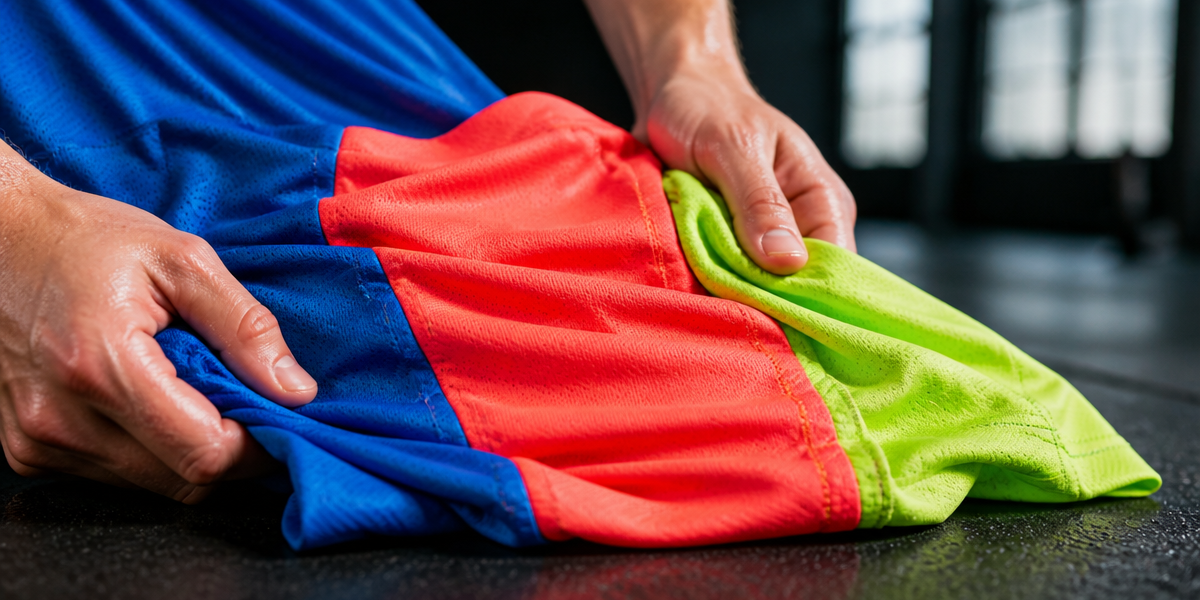
The implications of poor dye retention extend far beyond simple aesthetics. When colors bleed, they can permanently ruin multi-panel garments—a common issue in modern color-blocked athletic wear. If a red panel bleeds into a white mesh insert during a standard 40°C wash cycle, the garment’s commercial value is severely compromised.
Furthermore, excessive dye migration can affect the surface properties of the garment. Unfixed surface dyes can cause skin irritation for the athlete and, in cases of poor reduction clearing, can leave a surface residue. While previously thought to impede moisture-wicking, this residue is primarily an aesthetic and hand-feel issue rather than a proven cause of functional degradation. Maintaining strict colorfastness tolerances ensures both the visual integrity and the safety of the final product.
Key Colorfastness Tests for Polyester Sportswear Fabric
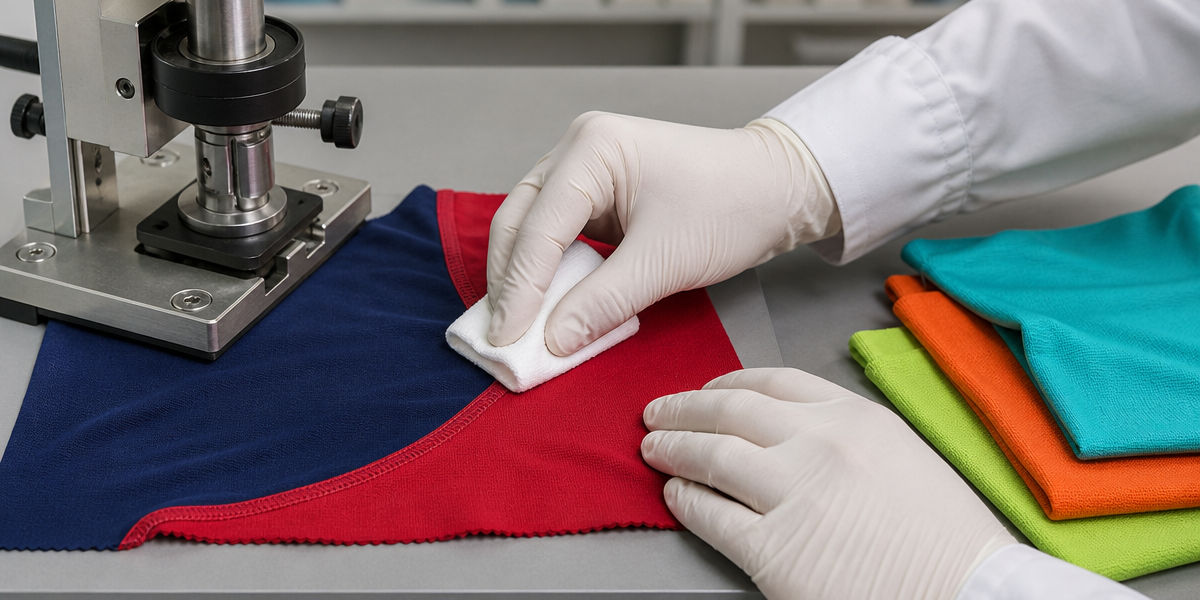
To guarantee that a batch of polyester meets commercial standards, manufacturers rely on a battery of standardized laboratory tests. In the textile sector, these results are universally graded on a grayscale ranging from 1 to 5, where Grade 5 represents zero color change or staining, and Grade 1 indicates severe degradation.
For activewear, a minimum passing score is generally Grade 4, though high-performance brands often demand Grade 4.5 for critical stressors. Without these rigorous benchmarks, predicting long-term fabric behavior is impossible.
Washing, Dry Rubbing, and Wet Rubbing Tests
The trifecta of fundamental testing includes laundering, dry crocking (rubbing), and wet crocking. When assessing washing colorfastness fabric, laboratories typically use ISO 105-C06 standards, subjecting the fabric to accelerated wash cycles with standard reference detergents to simulate months of consumer laundering.
Rubbing tests, governed by ISO 105-X12, are equally vital. Technicians use a crockmeter to rub a standardized white cotton cloth against the dyed polyester under controlled pressure. Wet rubbing is notoriously more difficult to pass than dry rubbing, particularly for synthetic fibers. Evaluating these tests requires a trained eye or a digital spectrophotometer to assess the degree of staining on the multifiber adjacent fabrics. For instance, when analyzing wet rubbing results, special attention is given to the nylon and elastane components of the adjacent fabric, as they are highly susceptible to unfixed disperse dyes.
| Test Type | ISO Standard | Typical Passing Grade (Sportswear) | Primary Vulnerability Tested |
|---|---|---|---|
| Washing | ISO 105-C06 | Grade 4.0 | Detergent degradation, temperature |
| Dry Rubbing | ISO 105-X12 | Grade 4.0 – 4.5 | Mechanical friction, surface dye |
| Wet Rubbing | ISO 105-X12 | Grade 3.5 – 4.0 | Friction combined with moisture |
| Perspiration | ISO 105-E04 | Grade 4.0 | Acidic and alkaline sweat reactions |
Special Considerations for Dark Colors
When specifying dark shades like deep navy, true black, or crimson, the risk profile changes entirely. Darker colors require a much higher concentration of disperse dyes, frequently pushing the saturation limits of the polyester fiber. If the dyehouse skips a thorough reduction clearing process—a chemical wash usually performed at 70°C to 80°C with sodium hydrosulfite and caustic soda—unfixed dye molecules will remain on the fiber surface.
This surface dye is the primary culprit behind poor wet rubbing scores in deep shades. When sourcing athletic wear fabric in these high-risk colors, stringent testing for color migration during storage is mandated, as dark dyes can sublimate and transfer to adjacent light-colored fabrics even while sitting in a temperature-fluctuating warehouse. It is also important to distinguish between piece-dyed disperse dyeing and sublimation transfer printing. While piece-dyeing saturates the entire fabric and requires rigorous clearing for dark shades, sublimation printing transfers dye directly into the fiber face via heat, presenting a different colorfastness risk profile that often yields sharper patterns but requires precise thermal controls to prevent subsequent dye migration.
How Suppliers Control Color Consistency
Achieving high colorfastness is only half the battle; replicating it across thousands of yards is where the true manufacturing challenge lies. Countless projects have been derailed because the bulk production failed to match the approved lab dip.
To maintain commercial viability, the industry relies on strict spectrophotometer readings. Color consistency is measured using the Delta E (ΔE) CMC formula. For high-quality activewear, quality control protocols strictly enforce a ΔE tolerance of ≤ 1.0 between the approved standard and the bulk fabric.
Key Takeaways
- Specify high-temperature disperse dyeing at 130°C to 140°C to help polyester fibers lock in color effectively.
- Require at least Grade 4 colorfastness for activewear, and consider Grade 4.5 for premium performance applications.
- Test polyester sportswear fabric against washing, perspiration, rubbing, UV exposure, and detergent because colorfastness is not a single measurement.
- Use stricter colorfastness controls for color-blocked garments to prevent dark panels from staining white mesh or lighter inserts.
- Review lab reports before bulk production so dyeing issues can be corrected before fabric becomes finished sportswear.
Frequently Asked Questions
What does colorfastness mean in polyester sportswear fabric?
Colorfastness measures how well dyed polyester resists fading, staining, or color transfer when exposed to washing, sweat, rubbing, UV light, and detergents.
Why is polyester usually good for wash fastness?
Polyester is dyed with disperse dyes at about 130°C to 140°C, allowing dye molecules to enter the fiber structure and become trapped as the fabric cools.
What colorfastness grade should activewear fabrics meet?
Most sportswear fabrics should achieve at least Grade 4 on the 1-to-5 grayscale, while higher-performance brands often require Grade 4.5 for critical tests.
Can poor colorfastness affect more than appearance?
Yes. Poor dye fixation can cause bleeding onto other panels, surface residue, unpleasant hand feel, and possible skin irritation during athletic use.
Why are color-blocked sportswear designs at higher risk?
Color-blocked garments often combine dark and light panels, so bleeding from a red, black, or navy section can permanently stain white mesh or pale inserts.
Post time: Sep-10-2026