
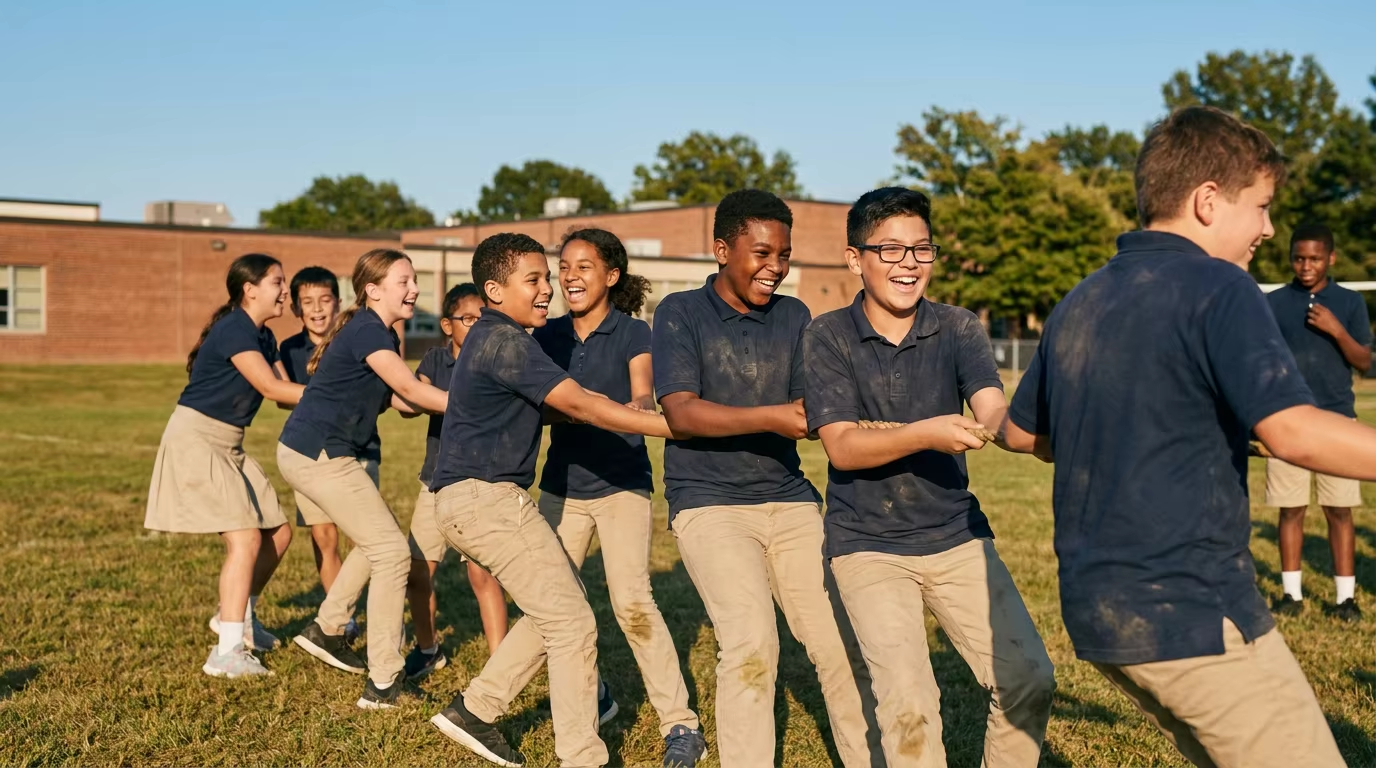
School uniforms are expected to survive daily wear, repeated washing, and constant movement throughout the academic year. Because of this, schools and uniform brands place strong emphasis on fabric durability before approving large bulk orders.
Today’s procurement teams no longer rely only on fabric appearance. Instead, they carefully evaluate technical performance indicators that directly affect garment lifespan and parent satisfaction.
For textile manufacturers and fabric suppliers, understanding how schools evaluate durable school uniform fabric is essential for winning long-term projects.
Why Durability Matters in School Uniform Procurement
School uniforms are worn almost every day. Unlike fashion garments, they must withstand:
- heavy friction
- repeated washing
- outdoor exposure
- student movement
- frequent ironing
Poor fabric durability often leads to:
- excessive pilling
- fading
- seam damage
- shape distortion
- parent complaints
As a result, schools increasingly require suppliers to provide technical testing reports before confirming large purchases.
Abrasion Resistance Testing
Abrasion resistance is one of the most important evaluations for school uniform fabrics.
Students constantly create friction against desks, chairs, backpacks, and playground surfaces.
Low-quality fabrics may quickly become rough or damaged.
Many buyers therefore search:
- “abrasion resistant school uniform fabric”
- “durable woven uniform fabric supplier”
- “high performance school uniform textile”
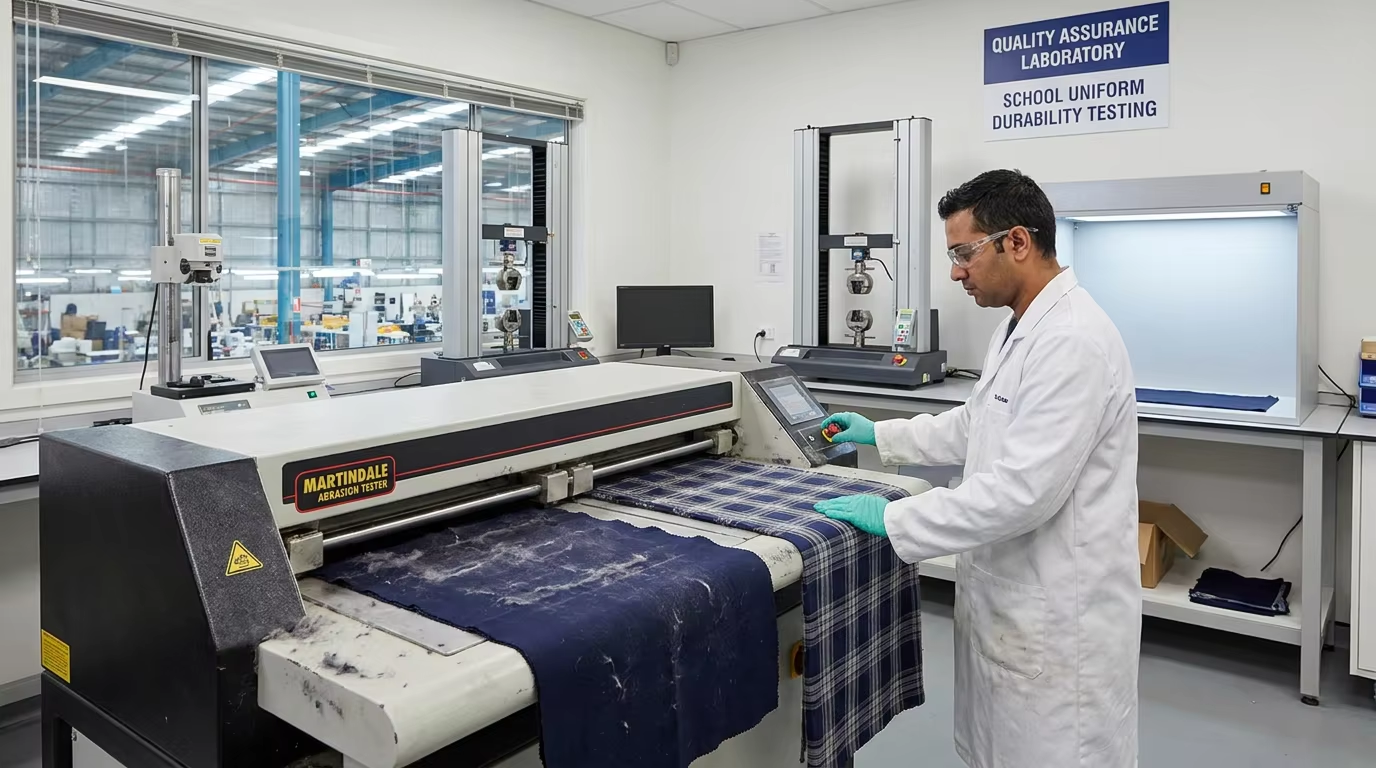
Martindale abrasion testing is commonly used to evaluate how many rubbing cycles a fabric can withstand before visible wear appears.
Polyester woven fabrics generally perform well because of their strong fiber durability.
Anti-Pilling Performance Is Closely Monitored
Pilling is one of the biggest complaints from parents.
Small fiber balls on the garment surface make uniforms appear old and worn even after limited use.
Schools often evaluate:
- pilling resistance after washing
- surface smoothness
- fabric fiber stability
Modern durable school uniform fabric is frequently engineered using:
- compact yarn structures
- higher-quality polyester fibers
- anti-pilling finishing technologies
For suppliers, demonstrating strong anti-pilling performance helps build buyer confidence.
Color Fastness Testing
Color fading is another critical issue in school uniforms.
Uniforms must maintain consistent appearance even after frequent washing and sunlight exposure.
Schools commonly test:
- wash fastness
- rubbing fastness
- perspiration fastness
- light fastness
Dark navy, black, maroon, and green uniforms require especially strong color performance.
Yarn-dyed school uniform fabrics are often preferred because they provide:
- stronger color stability
- reduced fading risk
- better long-term appearance
Washing Durability and Shrinkage Control
Many school uniforms are washed multiple times every week.
If shrinkage control is poor, garments may quickly become uncomfortable or visually distorted.
Procurement teams usually evaluate:
- dimensional stability
- shrinkage percentage
- seam twisting
- fabric deformation
High-quality polyester school uniform fabric performs well because it maintains shape more effectively than many natural fiber alternatives.
This is particularly valuable in tropical regions where uniforms require frequent laundering.
Why Wrinkle Resistance Matters
Parents prefer uniforms that require minimal ironing.
Wrinkled garments create additional maintenance work and negatively affect school appearance standards.
Modern wrinkle-resistant school uniform fabric helps reduce:
- ironing time
- maintenance costs
- garment care difficulties
Polyester woven fabrics dominate this category because they naturally recover better from creasing.
Schools Increasingly Request Laboratory Reports
Large school chains and uniform brands now require technical documentation before approving suppliers.
Commonly requested reports include:
- pilling test reports
- color fastness reports
- tensile strength testing
- shrinkage testing
- abrasion resistance certification
Suppliers capable of providing professional testing documentation gain a stronger competitive advantage.
How Suppliers Can Improve Buyer Confidence
Today’s uniform buyers value transparency and technical expertise.
Fabric suppliers can improve conversion rates by offering:
- clear testing standards
- sample support
- garment application recommendations
- consistent quality control
- repeat production stability
Many successful suppliers also create educational content explaining:
- fabric performance
- washing recommendations
- durability advantages
- technical specifications
This helps buyers make more informed decisions.
Why Polyester Continues Leading Durable Uniform Fabrics
Polyester remains one of the most widely used materials in durable school uniform fabric because it offers:
- strong abrasion resistance
- better wrinkle recovery
- excellent dimensional stability
- long-term color retention
- lower maintenance requirements
For schools balancing quality and budget control, polyester woven fabrics provide excellent overall performance.
Conclusion
Schools today evaluate school uniform fabrics using far more advanced standards than in the past. Durability, pilling resistance, color fastness, and washing performance all play major roles in supplier selection.
For textile manufacturers and wholesalers, providing technically reliable durable school uniform fabric supported by professional testing data is essential for winning modern school uniform projects.
As quality expectations continue rising globally, suppliers focused on durability innovation and stable production quality will remain highly competitive.

Yunai Textile
Post time: May-28-2026