
Introduction
Selecting a suiting blend is not just about price; it affects drape, comfort, durability, and how the finished garment performs over time. Polyester rayon and poly wool each solve different production and wear requirements, from budget-driven uniform programs to more premium tailoring lines. This article explains the practical differences between the two fabrics, including hand feel, breathability, wrinkle behavior, and cost positioning, so you can match material choice to your market and end use. With that context, the body will break down where each blend works best and what trade-offs matter most when specifying suit fabric.
Choosing Between Poly Rayon and Poly Wool Fabric
When I advise apparel brands and tailoring houses on suiting collections, the debate frequently centers on balancing target margins with long-term garment performance. Choosing between polyester rayon (often abbreviated as TR) and polyester wool fabrics shapes not only the initial manufacturing cost but the entire lifecycle of the suit. Both materials possess distinct chemical and physical properties that dictate their ideal market positioning, and understanding these nuances is essential for any successful production run.
Best Use Cases for Poly Rayon
Poly rayon stands out in high-volume, cost-sensitive production environments. I frequently recommend TR fabric for suit applications where strict budget constraints dictate a raw material cost between $2.50 and $4.50 per meter. This fabric forms the backbone of corporate uniform programs, rental tuxedos, and accessible fast-fashion tailoring. To modernize the fit and accommodate slimmer silhouettes, adding 2% to 5% elastane creates a highly functional poly rayon spandex fabric for suit garment. This slight stretch enhances mobility for daily wear while maintaining a sharp, structured appearance on the hanger.
Trade-Offs in Hand Feel and Performance
The primary trade-offs between these blends become apparent when analyzing thermal regulation and tactile hand feel. While high-quality poly rayon can effectively mimic the smooth drape of worsted wool, the synthetic and cellulosic fibers tend to retain more body heat. This makes standard TR less ideal for humid summer climates unless it is engineered with a highly porous, open weave. Poly wool, conversely, leverages wool’s natural fiber crimp to offer superior breathability and a natural bounce that resists daily wrinkling. Upgrading to a poly wool blend significantly improves crease recovery and longevity compared to a standard 65/35 polyester-rayon mix, though it typically increases the raw fabric cost by roughly 50% to 80%, pushing it into the $7.00 to $15.00 per meter tier.
Key Fabric Specifications to Compare
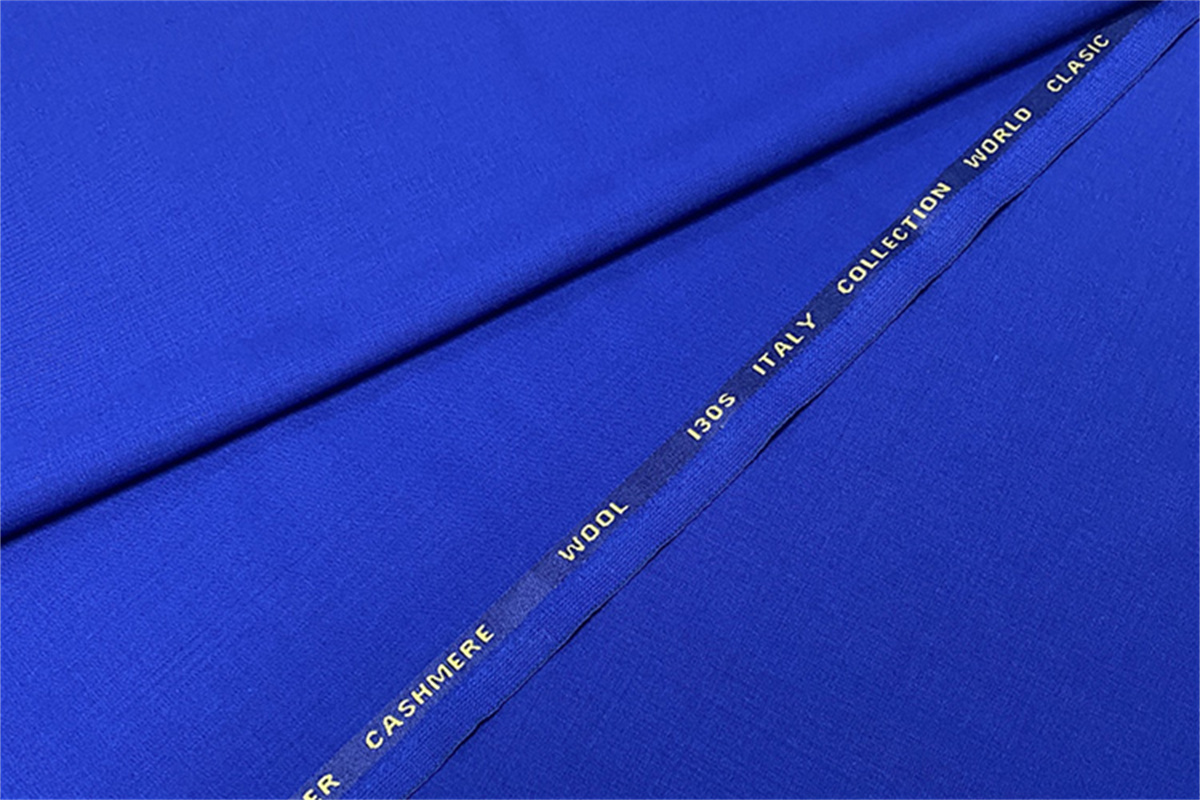
To make an informed purchasing decision, I always urge buyers to look beyond the basic composition percentages. Evaluating the technical construction of the fabric is the only way to ensure it meets your brand’s quality standards. Below is a baseline comparison I use to benchmark these suiting materials.
| Specification | Poly Rayon (TR) | Poly Wool Blend |
|---|---|---|
| Typical Weight | 280 – 380 g/m² | 250 – 320 g/m² |
| Breathability | Moderate | High |
| Pilling Resistance | Grade 3 to 4 | Grade 4 to 5 |
| Price Range (per meter) | $2.50 – $4.50 | $7.00 – $15.00 |
Blend, Yarn Count, Weight, and Weave
Understanding the precise blend ratios, yarn counts, and fabric weights is a critical step in my evaluation. For instance, a well-constructed 50% wool suit fabric often utilizes a 70s/2 or 80s/2 yarn count. The “/2″ indicates a two-ply yarn, which strikes a perfect balance between luxurious fineness and necessary tensile strength. In my experience, targeting a fabric weight of 280 gsm to 320 gsm provides the optimal structure for year-round, four-season suiting. When analyzing polyester wool fabric for suiting, a twill or serge weave is generally preferred over a simple plain weave, as the diagonal ribbing inherently enhances the fabric’s natural drape and mechanical durability.
Appearance, Comfort, and Durability
Appearance retention and comfort metrics directly impact the garment’s retail value and customer return rates. I specifically look for fabrics that can pass a minimum of 30,000 to 40,000 rubs on the Martindale abrasion test, ensuring the suit can withstand the friction of daily office wear. Poly rayon blends can sometimes suffer from premature pilling if the staple fibers are too short or poorly spun. Therefore, specifying an anti-pilling chemical treatment or singeing process to achieve a minimum Grade 4 rating is a standard, non-negotiable practice in my sourcing protocols. Furthermore, the inherent moisture-wicking properties of wool mean that even a 30% wool addition dramatically improves wearer comfort during extended use.
Practical Sourcing and Selection Process
Translating these technical specifications into a successful, on-time production run requires a rigorous and highly structured sourcing methodology. I have consistently found that comprehensive supplier qualification prevents costly delays and eliminates quality fading during mass production.
Qualifying Suppliers and Sampling
When qualifying a new textile mill, I first evaluate their Minimum Order Quantity (MOQ) and standard production lead times. A typical MOQ for custom-dyed poly rayon might range from 1,000 to 1,500 meters per colorway, accompanied by a lead time of 35 to 45 days. Before committing to a bulk purchase order, I always require 5 to 10 meters of sample yardage for prototype development and wear testing. While sourcing premium 100% wool suit fabric might involve specialized European or premium Asian mills with lower MOQs but substantially higher costs, commercial poly rayon and poly wool blends are primarily sourced from high-capacity mills where economies of scale dictate the pricing structure.
Making the Final Fabric Choice
Making the final selection involves rigorous pre-production testing to validate the supplier’s claims. I require suppliers to provide independent third-party testing reports—often from SGS or Intertek—ensuring that warp and weft shrinkage remains strictly below 2% after commercial dry cleaning. Additionally, I verify colorfastness to ensure a Grade 4 rating against both dry and wet rubbing. Finally, I establish an Acceptable Quality Limit (AQL) of 2.5 for inline fabric inspections to catch weaving defects, shading inconsistencies, or irregular selvedge widths before the fabric is ever cut. By calculating the exact yield required per suit—typically 3.2 to 3.5 meters for a standard men’s two-piece—I can accurately project my final FOB costs and confidently finalize the optimal fabric choice for my production line.
Key Takeaways
- The most important conclusions and rationale for polyester rayon and poly wool fabric for suits
- Specs, compliance, and risk checks worth validating before you commit
- Practical next steps and caveats readers can apply immediately
Frequently Asked Questions
Which fabric is better for budget suit programs?
Polyester rayon (TR) is usually best for cost-sensitive suits, uniforms, and rental wear. Typical fabric cost is about $2.50–$4.50 per meter.
When should I choose poly wool over polyester rayon?
Choose poly wool when you need better breathability, wrinkle recovery, and longer wear life. It suits premium business tailoring and warmer working conditions.
What fabric weight works best for year-round suits?
A weight around 280–320 gsm is a practical target for four-season suiting. It balances structure, comfort, and daily durability.
What specifications should I request from a suiting fabric supplier?
Ask for blend ratio, yarn count, weave, weight, Martindale abrasion results, and pilling grade. For reliable office wear, target 30,000–40,000 rubs and at least Grade 4 pilling resistance.
Can I source polyester rayon and poly wool suit fabrics from IYUNAI Textile?
Yes. IYUNAI Textile offers TR suit fabrics, poly rayon spandex options, and poly wool suiting suitable for uniforms, business suits, and tailored collections.
Post time: Jun-09-2026