

The South American healthcare uniform market presents opportunities for medical uniform fabric suppliers, scrub brands, healthcare apparel manufacturers, and textile distributors.
Countries such as Brazil, Chile, Colombia, Argentina, and other Latin American markets have different healthcare systems, climates, and purchasing structures. Therefore, medical uniform fabric suppliers should avoid using a one-size-fits-all approach when developing products for the region.
Instead, successful sourcing requires understanding local buyer priorities, including:
- Comfortable fabrics for long working hours
- Stable colours for professional healthcare uniforms
- Easy-care performance
- Durable fabric construction
- Competitive total cost
- Flexible customization
- Reliable production and delivery
For international suppliers, the key question is not simply:
“What fabric can we sell to South America?”
A better question is:
“What medical uniform fabric solution can support the specific needs of healthcare brands, distributors, and end users in each South American market?”
This article explains how buyers can evaluate medical uniform fabric for South America and select suitable healthcare workwear materials.
1. Understanding Medical Uniform Fabric Demand in South America
South America includes diverse markets with different healthcare structures, climates, and purchasing behaviours.
A private healthcare group may prioritize:
- Professional appearance
- Brand identity
- Comfortable uniforms
- Custom colours
- Consistent quality
A distributor or uniform manufacturer may focus more on:
- Competitive pricing
- Stable supply
- Repeat-order capability
- Easy-care fabrics
- Practical performance
Therefore, fabric suppliers should begin with market validation instead of assuming that every buyer has identical requirements.
Important questions include:
- Who is the final user?
- Is the uniform for hospitals, clinics, laboratories, or healthcare distributors?
- How frequently will the garment be washed?
- What climate conditions will affect comfort?
- Is customization required?
- What is the expected replacement cycle?
Understanding these factors helps suppliers recommend the right fabric construction.
2. Comfort Matters for Healthcare Professionals Working Long Hours
Healthcare workers often wear uniforms throughout long shifts.
Therefore, comfort is an important factor when selecting medical scrub fabric in South America.
Buyers may evaluate:
- Fabric hand feel
- Breathability
- Weight
- Softness
- Stretch
- Moisture comfort
- Freedom of movement
In warmer regions, lightweight and breathable fabrics can become especially relevant.
However, comfort should be balanced with durability.
A very lightweight fabric may feel comfortable but may not provide the required lifespan for frequent professional use.
The goal is to develop fabrics that balance:
Comfort + Durability + Easy Maintenance
3. Colourfastness Is Important for Healthcare Uniform Brands
Healthcare uniforms are increasingly becoming part of professional brand identity.
Many hospitals, clinics, and healthcare groups use different colours to represent:
- Departments
- Professional roles
- Brand image
- Corporate identity
For this reason, colorfast medical scrub fabric can be an important consideration for South American buyers.
Common evaluation areas include:
- Colourfastness to washing
- Colourfastness to rubbing
- Colour consistency between production lots
- Resistance to colour change after repeated care
For brands developing healthcare uniform collections, colour matching capability can provide additional value.
A professional colour approval process should include:
- Colour development
- Lab dip confirmation
- Customer approval
- Bulk production checking
- Final colour comparison
This helps reduce differences between approved samples and finished production.
4. Stretch Medical Uniform Fabric Supports Modern Healthcare Apparel Designs
Medical uniforms are becoming more design-oriented in many international markets.
Healthcare apparel brands increasingly develop uniforms that combine:
- Professional appearance
- Modern fit
- Comfortable movement
- Functional design
This creates demand for fabrics with stretch performance.
Polyester-rayon-spandex fabrics such as TRSP and TSP can provide a balance of:
- Soft hand feel
- Durability
- Drape
- Stretch comfort
- Wrinkle recovery
Four-way stretch fabrics may also be considered for healthcare trousers, fitted scrub tops, and modern uniform styles.
When selecting stretch medical uniform fabric, buyers should evaluate:
- Stretch percentage
- Recovery performance
- Fabric weight
- Surface appearance
- Pilling resistance
- Washing stability
A higher stretch percentage does not automatically mean better fabric quality. The complete performance balance is more important.
5. Cost Control Should Consider Total Uniform Value
For many South American buyers, cost competitiveness is an important purchasing factor.
However, the lowest fabric price does not always create the lowest overall cost.
A fabric that experiences:
- Faster colour fading
- Increased pilling
- Shrinkage
- Loss of appearance
- Poor repeat-order consistency
may increase replacement costs.
Therefore, buyers can evaluate:
Initial fabric cost + garment lifespan + maintenance + replacement frequency
This is known as total cost of ownership.
A slightly higher-quality fabric may provide better long-term value if it maintains performance throughout the garment lifecycle.
For healthcare uniform brands and distributors, this approach can support stronger customer satisfaction.
6. Easy-Care Fabrics Support Practical Healthcare Applications
Healthcare uniforms need to fit real working environments.
Buyers may prefer fabrics that are practical to maintain, especially when uniforms are washed frequently.
Important easy-care characteristics include:
- Good wrinkle recovery
- Stable shape after washing
- Low shrinkage
- Durable colour performance
- Easy ironing
- Consistent appearance
For South American healthcare uniform suppliers, easy-care performance can become an important selling point when working with hospitals, clinics, and distributors.
A supplier should provide clear care recommendations and avoid making unsupported performance claims.
7. Brazil: Customization and Healthcare Uniform Development Opportunities
Brazil is one of the largest countries in South America and has a diverse healthcare and apparel market.
For medical uniform fabric suppliers, Brazil can be a market where buyers may value:
- Product variety
- Custom colours
- Flexible development
- Competitive pricing
- Reliable production
Healthcare uniform brands may require fabrics adapted to different customer segments, from private clinics to larger healthcare organizations.
For suppliers, the ability to support:
- Small trial orders
- Colour development
- Customized specifications
- Repeat production
can become an important advantage.
However, actual buyer requirements should always be confirmed through direct communication with local customers and distributors.
8. Chile and Colombia: Professional Appearance and Reliable Supply
Markets such as Chile and Colombia can provide opportunities for suppliers that focus on consistent quality and professional healthcare apparel solutions.
Buyers may evaluate:
- Fabric appearance
- Colour stability
- Comfort
- Delivery reliability
- Supplier communication
For healthcare uniform manufacturers serving these markets, a stable supplier relationship can be valuable because customers often require consistent products for repeat business.
A fabric supplier should be prepared to support:
- Approved samples
- Technical documentation
- Production tracking
- Quality inspection
- Repeat orders
9. Documentation Helps International Buyers Reduce Risk
For South American buyers sourcing medical uniform fabrics internationally, technical documentation can simplify supplier evaluation.
A professional supplier should provide:
- Fibre composition
- Fabric construction
- GSM
- Width information
- Stretch performance
- Colourfastness testing
- Anti-pilling testing where applicable
- Shrinkage information
- Finishing details
- Care instructions
For customized products, maintaining an approved specification is also important.
This helps ensure that future production matches the original development sample.
10. Reliable Supply and Communication Are Key for Import Buyers
For international buyers, sourcing challenges are not limited to fabric performance.
They also include:
- Production schedules
- Sample confirmation
- Shipping arrangements
- Documentation
- Quality control
- Repeat-order consistency
A reliable medical uniform fabric supplier should communicate clearly throughout the process.
Important supplier capabilities include:
Production Management
Can the supplier maintain stable quality during bulk production?
Quality Control
Are fabrics inspected before shipment?
Problem Solving
Can the supplier quickly investigate production issues?
Long-Term Support
Can the supplier support future product development?
For healthcare uniform businesses, these factors can influence customer satisfaction and business stability.
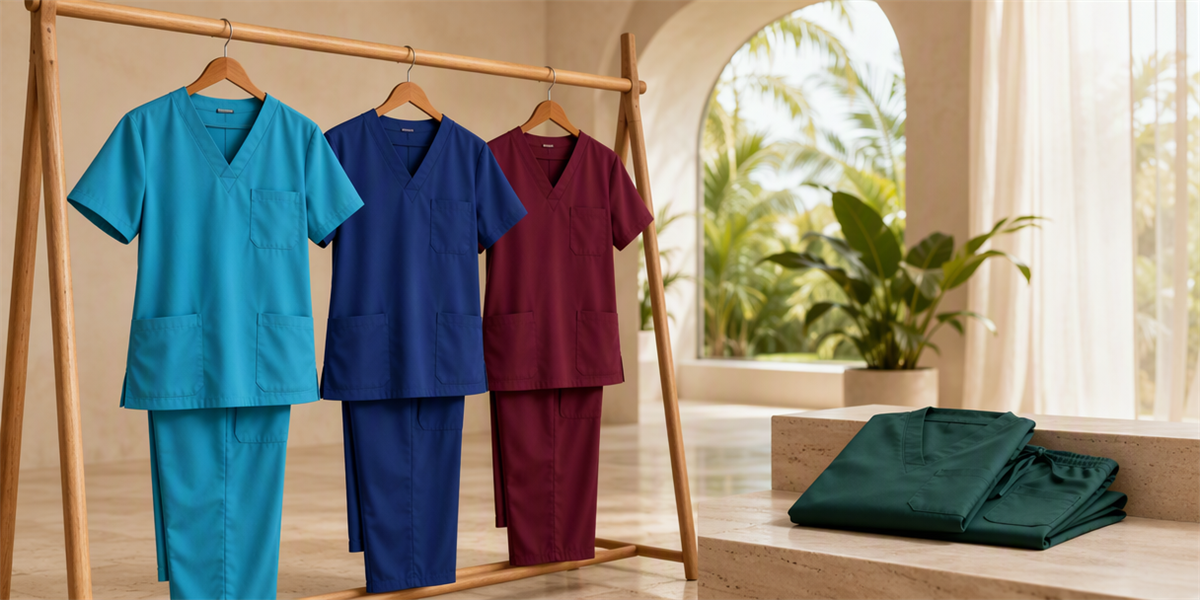
11. What Medical Uniform Fabrics Can Be Considered for South America?
Different customers require different solutions.
Potential fabric directions include:
TRSP Medical Uniform Fabric
Suitable for buyers looking for:
- Stretch comfort
- Soft hand feel
- Professional appearance
- Durability
TSP Medical Uniform Fabric
Suitable for:
- Flexible healthcare uniforms
- Easy-care applications
- Comfortable movement
Breathable Medical Uniform Fabric
Suitable for warmer climates and long working hours.
Anti-Pilling Medical Fabric
Suitable for healthcare uniforms requiring long-lasting appearance.
Customized Medical Fabrics
Suitable for brands requiring:
- Special colours
- Different GSM
- Custom finishing
- Specific performance requirements
The best solution depends on the customer’s garment design, target market, and performance expectations.
12. How South American Buyers Can Evaluate Medical Uniform Fabric Suppliers
A structured evaluation process can help buyers choose reliable partners.
| Evaluation Area | Key Question |
|---|---|
| Comfort | Is the fabric suitable for long shifts? |
| Breathability | Is it suitable for local climate conditions? |
| Durability | Can it maintain performance after repeated use? |
| Colourfastness | Can colours remain stable? |
| Stretch | Does it provide sufficient movement? |
| Easy Care | Is maintenance practical? |
| Customization | Can colours and specifications be adjusted? |
| Documentation | Are technical details available? |
| Consistency | Can repeat orders match samples? |
| Delivery | Can the supplier provide reliable schedules? |
| Cost | Does the fabric provide long-term value? |
This approach allows buyers to compare suppliers based on overall capability.
Conclusion: Building Medical Uniform Fabric Solutions for South America
The South American medical uniform fabric market requires a balanced approach.
Different countries and customers may have different priorities, but several factors remain important:
Comfort.
Colour stability.
Durability.
Easy care.
Stretch performance.
Customization.
Reliable supply.
Competitive total value.
For medical uniform brands, wholesalers, and distributors, the best sourcing decision is not simply choosing the lowest-priced fabric.
The better question is:
“Can this fabric provide the performance, appearance, customization, and supply reliability needed for our healthcare uniform programme?”
For manufacturers such as YunAi Textile, this creates an opportunity to support South American buyers as a long-term development partner.
By combining fabric customization, quality control, technical support, and stable production, suppliers can help healthcare uniform brands create products that meet the practical needs of different South American markets.

Yunai Textile
Post time: Sep-24-2026