
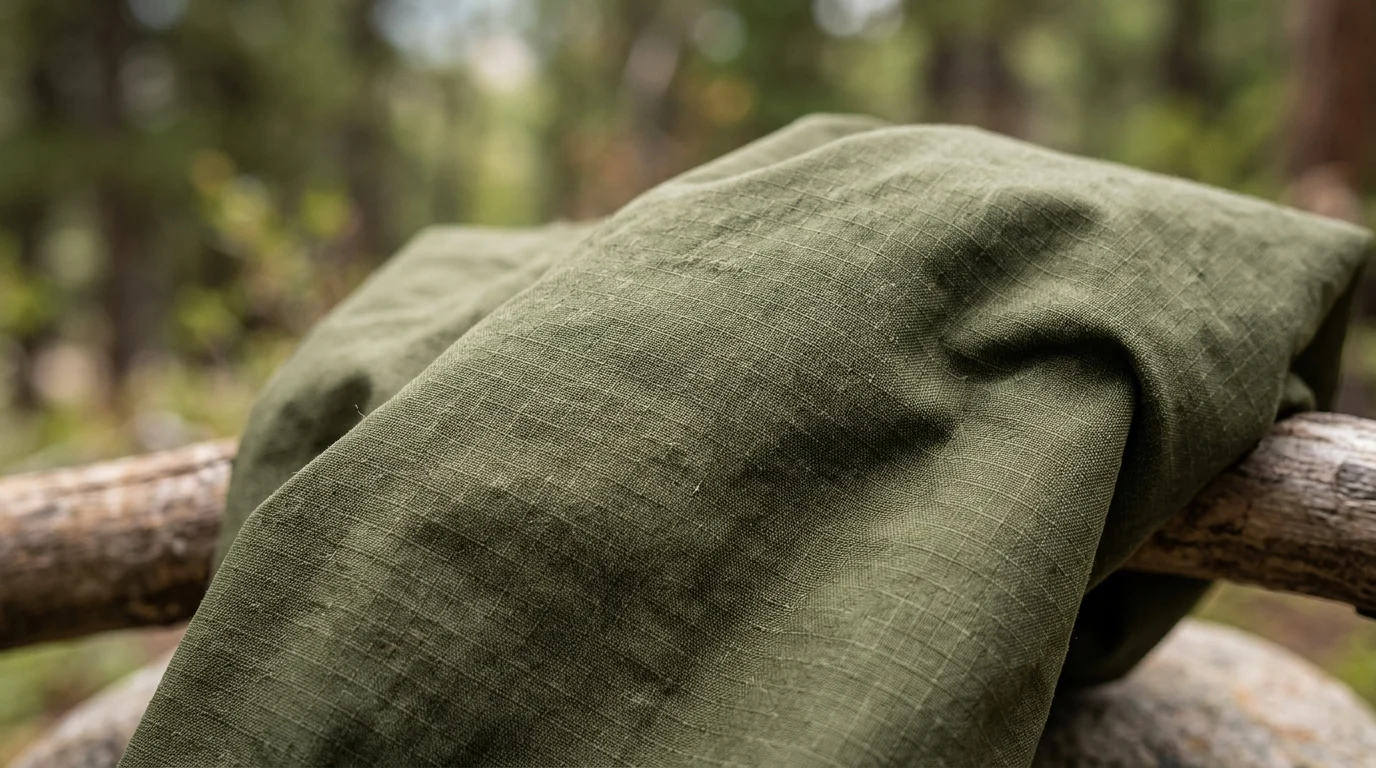
Introduction
Choosing fabric for outdoor jackets means balancing weather protection, breathability, stretch, and cost in a way that matches how the garment will actually be used. For low MOQ orders, that decision matters even more, because smaller runs leave less room for expensive trial and error. This guide explains how waterproof and softshell fabrics are built, what performance terms really mean, and how to compare options for hiking, commuting, or light technical use. By the end, you will have a clearer framework for selecting outdoor jacket fabric that fits your product goals, customer expectations, and sourcing constraints.
Why Outdoor Jacket Fabric Selection Matters
Picking the right material for outdoor apparel can make or break a product line. When consumers buy an outdoor jacket, they want a reliable shield against unpredictable weather without feeling like they are wearing a stiff plastic bag. Striking the perfect balance between weather resistance, warmth, and mobility comes down to the fabric you source.
For brands producing high-quality gear on a smaller scale, understanding how these materials are built is the first step. You do not just need something that looks good on a hanger; you need a technical textile that performs exactly as promised when the rain pours and the wind picks up.
How to Frame Fabric Performance in the Introduction
When introducing a new jacket to the market, framing its performance starts with understanding the end user’s environment. A casual hiker needs different protection than a mountaineer facing alpine blizzards. By breaking down performance into clear categories—such as keeping water out, letting sweat escape, and moving with the body—brands can set accurate expectations.
It is all about the synergy between fabric layers. If a jacket is highly water-resistant but traps body heat, the wearer will end up soaked in their own sweat. Framing performance means viewing the material as an active system rather than a static piece of cloth.
What 3-Layer Waterproof Softshell Construction Means
The secret behind most modern, high-performing outerwear is three-layer construction. When you look at a premium piece of softshell fabric, you are actually looking at a sandwich of specialized materials laminated together using a bonding machine.
The outer layer typically consists of a blend like 92% polyester and 8% spandex. This provides crucial four-way stretch, allowing the garment to move naturally with the wearer. The middle layer acts as the primary shield—a waterproof, breathable, and windproof membrane that stops the elements in their tracks. Finally, the inner layer is usually a 100% polyester polar fleece. This backing sits softly against the skin or base layers, trapping body heat to keep the wearer warm. Altogether, this three-layer bonded system usually hits a substantial weight of around 315gsm to 320gsm, offering a robust feel without being overly bulky.
Which Outdoor Jacket Fabric Specifications Buyers Should Compare
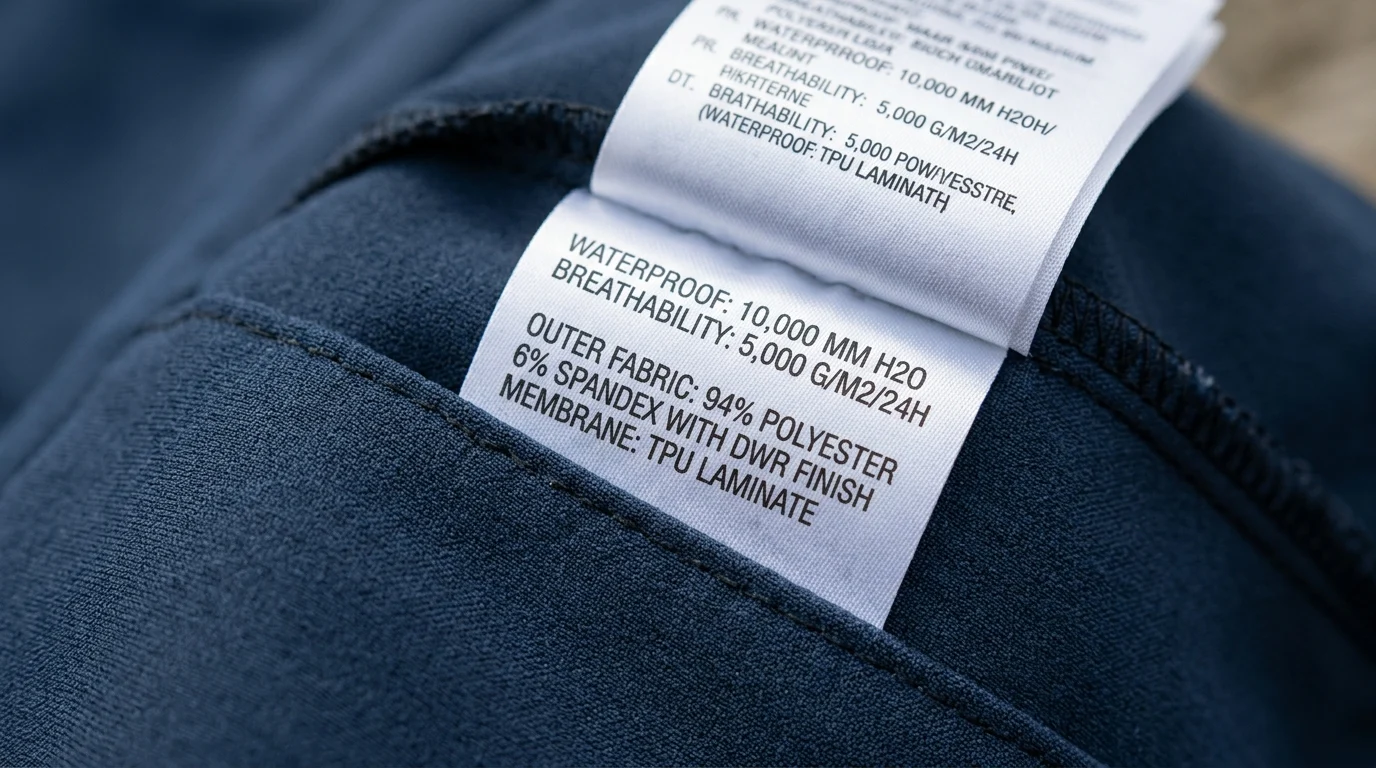
Staring at a supplier’s spec sheet can be overwhelming if you do not know what the numbers mean. To source the best possible material for your outerwear line, you must understand how to compare the technical specifications that dictate real-world performance.
How to Compare Waterproofing, Breathability, Stretch, Weight, an
d DWR
Waterproofing is typically measured by a hydrostatic head test, expressed in millimeters (mm). A standard entry-level 3 layer waterproof fabric usually offers a rating between 3,000mm and 8,000mm, which is perfectly fine for light rain and everyday wear. However, for serious outdoor applications, look for membranes that push those numbers up to 10,000mm or even 20,000mm.
Breathability is equally crucial and is measured in grams per square meter over a 24-hour period (gsm/24h). A basic fabric might offer 500 to 1,000 gsm/24h, while high-activity gear needs anywhere from 5,000 to 10,000 gsm/24h to prevent sweat buildup. You must also consider the Durable Water Repellent (DWR) treatment applied to the outer face. Brands often use treatments like Teflon, 3M, or Nano coatings to create a “lotus leaf” effect, causing water droplets to bead up and roll right off the 315gsm stretch fabric.
What Comparison Table to Use for TPU Fabric Options
The middle membrane is the engine of your jacket’s weather resistance, and suppliers generally offer three main types: TPU, TPE, and PTFE. TPU (Thermoplastic Polyurethane) is the industry standard, offering a great balance of cost and performance. TPE is sought after for its eco-friendly properties, while PTFE provides top-tier, extreme weather performance akin to the most famous name-brand membranes on the market.
To make the best sourcing decision, use this clear comparison of how these membranes stack up against each other in standard production runs:
| Membrane Type | Best Application | Waterproof Range | Breathability Range | Environmental Profile |
|---|---|---|---|---|
| TPU | Standard outdoor jackets | 3,000 – 20,000 mm | 500 – 10,000 gsm/24h | Standard |
| TPE | Eco-conscious activewear | 3,000 – 15,000 mm | 500 – 8,000 gsm/24h | Eco-friendly |
| PTFE | Extreme alpine gear | 10,000 – 28,000+ mm | 5,000 – 15,000+ gsm/24h | Low (High performance) |
How Buyers Can Source Outdoor Jacket Fabric for Low MOQs
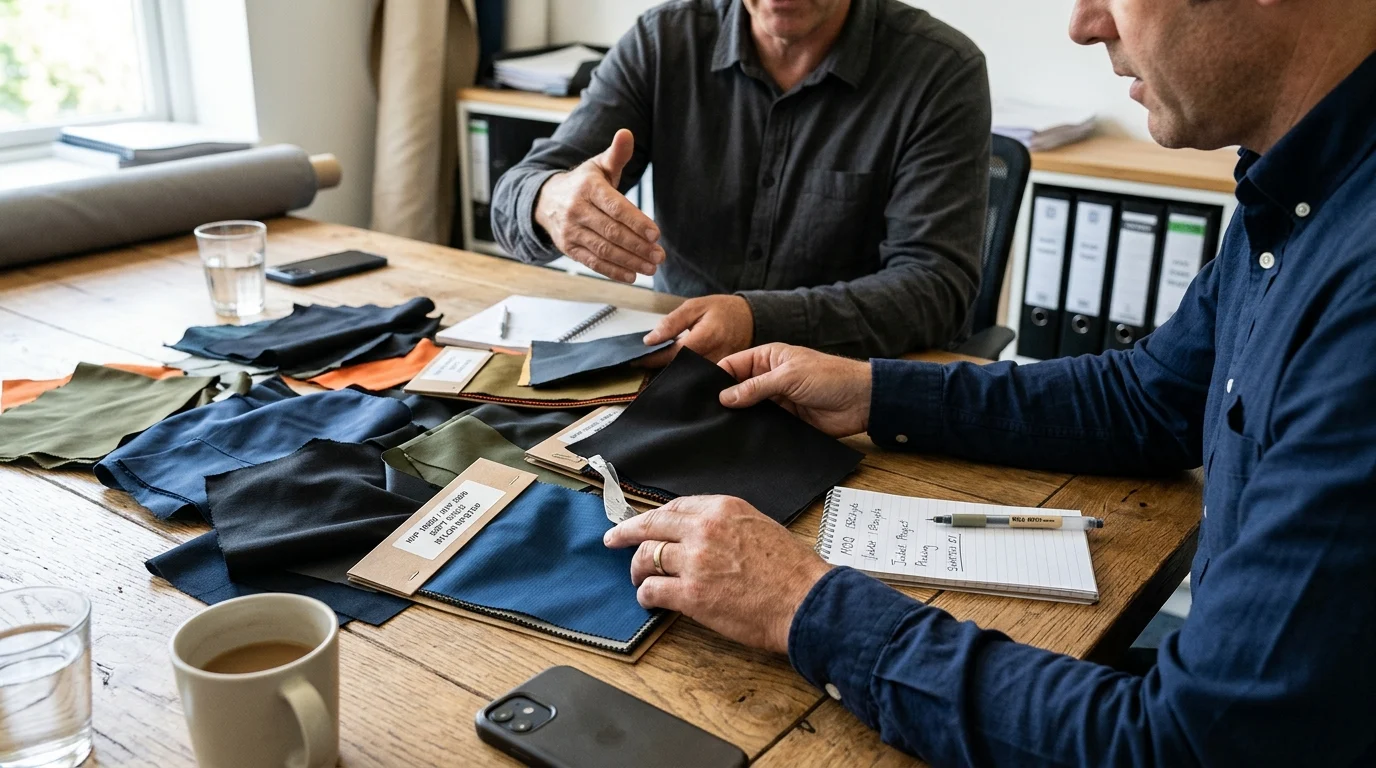
One of the biggest hurdles for independent brands and startups is navigating Minimum Order Quantities (MOQs). Sourcing premium technical textiles often requires buying thousands of meters at a time, which can tie up capital and create inventory nightmares. However, with the right approach, securing high-quality materials in smaller batches is entirely possible.
What Order Process to Follow for Small Batch Sourcing
If you are looking to develop custom colors or apply highly specific DWR treatments, most factories require a standard MOQ of around 1,000 meters per color. This is because setting up the dyeing and lamination machines for a 3-layer bonded fleece is expensive. Fortunately, there is a smart workaround for smaller runs.
Buyers should actively look for ready goods low MOQ outdoor jackets fabric from their suppliers. When a factory holds inventory of popular colors—like standard black, navy, or olive drab—the MOQ often drops to zero. This means you can order exactly what you need for a limited production run. Always start the process by requesting a one-meter sample. This allows your design team to physically test the four-way stretch, verify the 315gsm weight, and ensure the polar fleece backing feels right before committing to a larger purchase.
How to Guide Readers Toward the Right Fabric Choice
Guiding your brand toward the right fabric ultimately comes down to matching the material’s specs to your target customer’s actual needs and environment.
Key Takeaways
- The most important conclusions and rationale for Outdoor jackets fabric
- Specs, compliance, and risk checks worth validating before you commit
- Practical next steps and caveats readers can apply immediately
Frequently Asked Questions
What is the best outdoor jacket fabric for low MOQ orders?
A 3-layer waterproof softshell is a practical choice. It combines stretch face fabric, a waterproof-breathable membrane, and warm fleece backing, making it versatile for small-batch outdoor jacket collections.
How waterproof should outdoor jacket fabric be for everyday use?
For light rain and daily wear, 3,000–8,000mm is usually enough. If your jackets target harsher weather, choose fabric rated around 10,000mm or higher.
What breathability level should I look for in softshell jacket fabric?
For casual outdoor jackets, 500–1,000 gsm/24h can work. For hiking or active use, aim for 5,000–10,000 gsm/24h to reduce sweat buildup.
Why is 3-layer softshell fabric popular for outdoor jackets?
It balances weather protection, comfort, and movement. The outer layer adds stretch, the membrane blocks water and wind, and the fleece backing provides warmth.
Which membrane is best for low MOQ outdoor jacket fabric: TPU, TPE, or PTFE?
TPU is usually the best starting point for low MOQ orders. It offers solid waterproof and breathable performance at a more manageable cost than PTFE.
Post time: Jun-04-2026