
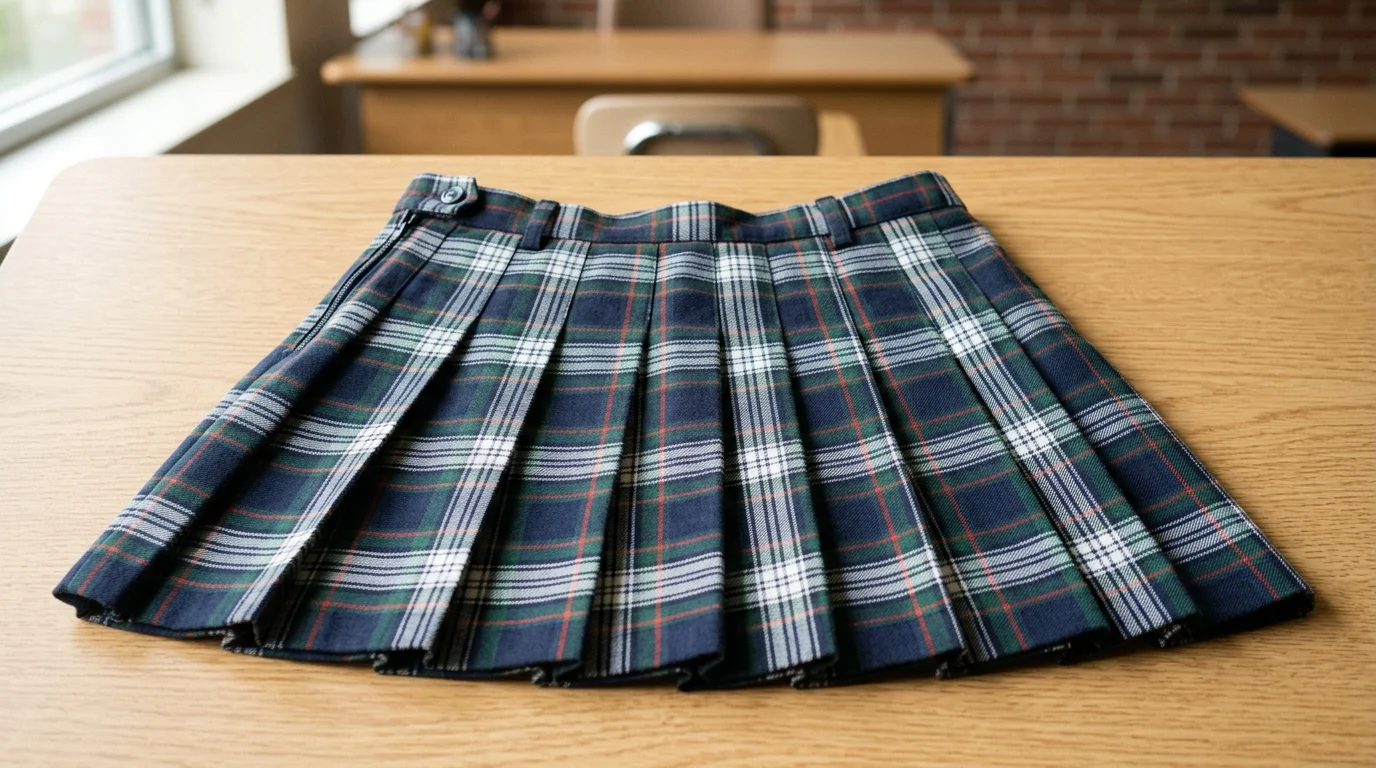
Why school uniform skirt fabric sourcing is changing in the
The United States school uniform market is undergoing a structural shift driven by institutional dress code standardization and volatile textile supply chains. For procurement teams and wholesale importers, securing reliable yardage requires navigating fluctuating raw material costs and shifting blend preferences. While 100% polyester historically dominated the sector due to cost-efficiency, modern institutional buyers increasingly demand polyester-rayon (poly-viscose) blends. These materials offer superior drape and breathability while maintaining the critical structural integrity required for pleated garments.
Annual procurement volumes for mid-to-large distributors frequently exceed 50,000 to 100,000 yards per season, making strategic mill alignment essential. Maintaining gross margins in an inflationary environment requires buyers to understand the intersection of raw material indices, weaving capacities, and seasonal logistics.
K-12 demand and dress code trends
The expansion of charter networks and private academies has catalyzed a robust 7% to 10% year-over-year increase in proprietary plaid procurement. Dress code enforcement heavily favors skirts, skorts, and jumpers, dictating strict color matching and precise pattern repetition across multiple academic years.
Procurement cycles are highly seasonal and unforgiving. Buyers must align their sourcing with the peak yarn-dyed fabric season, which typically runs from November to February. Securing mill weaving capacity during this critical window ensures finished textiles reach US distribution centers or offshore cut-and-sew facilities by May. This timeline is non-negotiable for capturing the August back-to-school retail surge, where late deliveries result in severe chargebacks or lost contracts.
Fabric definitions and product scope
Defining the optimal material scope requires balancing aesthetic requirements with industrial durability. Standard school skirt fabric in the US market predominantly utilizes a 65/35 or 80/20 polyester-to-rayon ratio. Rayon introduces a softer, more natural hand-feel and significantly reduces static buildup—a common complaint with pure synthetics—while the dominant polyester matrix ensures thermal pleat retention through repeated launderings.
Unlike standard shirting poplins, bottom-weight textiles for skirts must feature a tighter weave, higher denier yarns, and superior tensile strength. This structural density is required to prevent transparency and resist daily abrasion in active K-12 environments, ensuring the garment survives a minimum of 50 to 75 industrial wash cycles.
Key specifications for sourcing school uniform skirt fabric
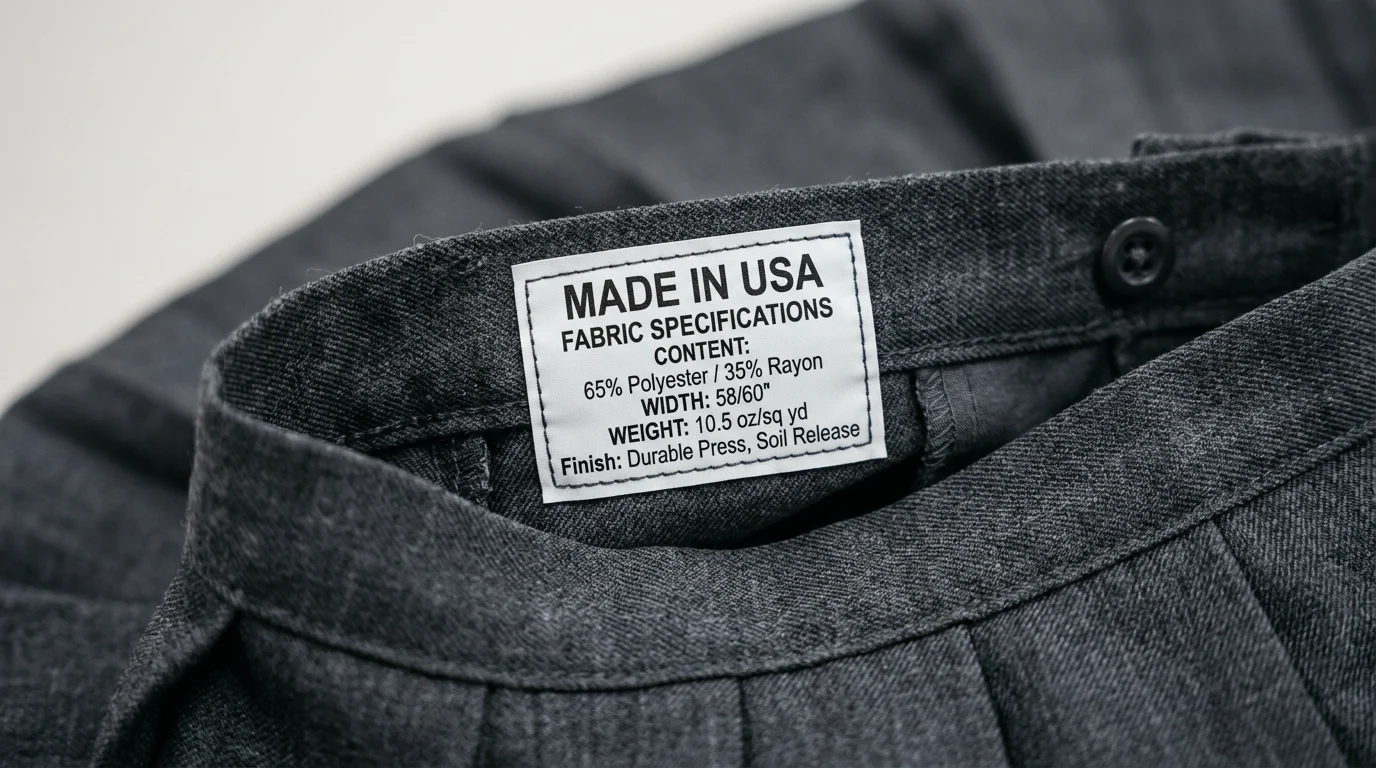
Establishing rigid technical specifications is mandatory to protect profit margins from downstream return rates and institutional complaints. B2B buyers must issue comprehensive Technical Data Sheets (TDS) to overseas mills prior to sampling and bulk production.
A failure to standardize weight, weave construction, and chemical finishing parameters often results in inconsistent dye lots, poor pleat memory, and premature garment degradation. Procurement teams must move beyond subjective hand-feel and rely entirely on quantifiable textile metrics to enforce vendor accountability.
Blend, weight, and durability criteria
Institutional bottom-weights demand specific performance thresholds. The ideal school skort fabric typically falls within the 220 to 280 grams per square meter (GSM) range, often utilizing a 2/2 twill weave for added durability. Fabrics lighter than 220 GSM suffer from poor drape and pleat failure, while those exceeding 280 GSM unnecessarily increase landed costs and reduce wearer comfort in warmer climates.
Critical testing parameters include a tear strength exceeding 25 Newtons, a pilling resistance of Grade 4 (ISO 12945-2), and colorfastness to washing at Grade 4 or higher. Additional chemical finishes, such as durable water repellent (DWR) or anti-static coatings, are frequently specified to enhance longevity.
| Fabric Blend Ratio | Typical Weight (GSM) | Pilling Resistance | Estimated FOB Cost Index | Best Application Tier |
|---|---|---|---|---|
| 100% Polyester | 180 – 220 | Grade 3-4 | Lowest ($) | Budget / Value Uniforms |
| 80% Poly / 20% Rayon | 220 – 250 | Grade 4 | Medium ($$) | Standard K-12 Academies |
| 65% Poly / 35% Rayon | 240 – 280 | Grade 4-5 | Higher ($$$) | Premium Private Schools |
Supplier comparison framework
Evaluating textile mills requires analyzing their capacity for custom yarn-dyed patterns, which are significantly more technically complex than piece-dyed solids. A capable supplier for school jumper fabric should support Minimum Order Quantities (MOQs) between 1,500 and 3,000 meters per colorway to accommodate specialized regional school plaids.
Sourcing teams must aggressively audit lead times; weaving intricate multi-color plaids typically requires 35 to 45 days of production time after initial lab dip approval. Furthermore, buyers should prioritize mills holding OEKO-TEX Standard 100 certifications, ensuring the raw materials and dyes are free from harmful substances, thereby streamlining compliance audits for the North American market.
How to build a compliant and profitable supply strategy
A profitable supply strategy hinges on mitigating landed cost variances, ensuring frictionless customs clearance, and maintaining strict quality oversight. Importers must calculate the Total Cost of Ownership (TCO) at the SKU level, factoring in ocean freight volatility, complex duty rates, and third-party quality assurance fees.
Sourcing polyester-rayon blends introduces specific compliance and logistical variables that dictate overall margin viability. Sourcing managers must adopt a proactive, data-driven approach to global supply chain management to insulate their operations from geopolitical and logistical shocks.
Risk reduction across mill selection and sourcing
Risk reduction begins with aggressive quality control protocols executed before the fabric ever leaves the origin port. Procurement managers should mandate Acceptable Quality Limit (AQL) standards of 2.5 for major defects and 4.0 for minor defects during third-party pre-shipment inspections. Defect rates exceeding 2% per roll can severely disrupt domestic cut-and-sew operations, leading to catastrophic production bottlenecks.
Logistics optimization is equally critical for margin protection. A standard 40-foot High Cube (40HQ) container can accommodate approximately 60,000 to 65,000 meters of 250 GSM school uniform dress fabric. Maximizing container utilization through precise roll packing dilutes the per-meter freight cost, directly expanding gross margins.
Final decisions on compliance and tariffs
US Customs and Border Protection (CBP) enforces strict tariff classifications on imported textiles that can heavily impact landed costs.
Key Takeaways
- Wholesale sourcing and supply-chain implications for school uniform skirt fabric in USA
- Specifications, compliance, and commercial terms buyers should validate
- Actionable recommendations for distributors and procurement teams
Frequently Asked Questions
What blend is best for school uniform skirt fabric in the USA?
For most K-12 skirts, 80/20 or 65/35 polyester-rayon works best. It improves drape and comfort while keeping pleats stable and durable for repeated washing.
What fabric weight should buyers choose for school uniform skirts?
A practical target is 220–280 GSM. This range gives better coverage, pleat retention, and abrasion resistance than lighter shirting fabrics.
When should USA buyers place school uniform plaid fabric orders?
Book yarn-dyed plaid production from November to February. This helps secure weaving capacity and supports delivery before the August back-to-school season.
What testing standards matter most for skirt fabric sourcing?
Ask for tear strength above 25N, pilling Grade 4, and washing colorfastness Grade 4 or higher. These specs reduce returns and school complaints.
Can iyunaitextile.com support custom school uniform plaid fabric orders?
Yes, iyunaitextile.com focuses on polyester-rayon and yarn-dyed uniform fabrics. Confirm your plaid pattern, GSM, finish, and MOQ before sampling and bulk production.
Post time: Jul-21-2026