
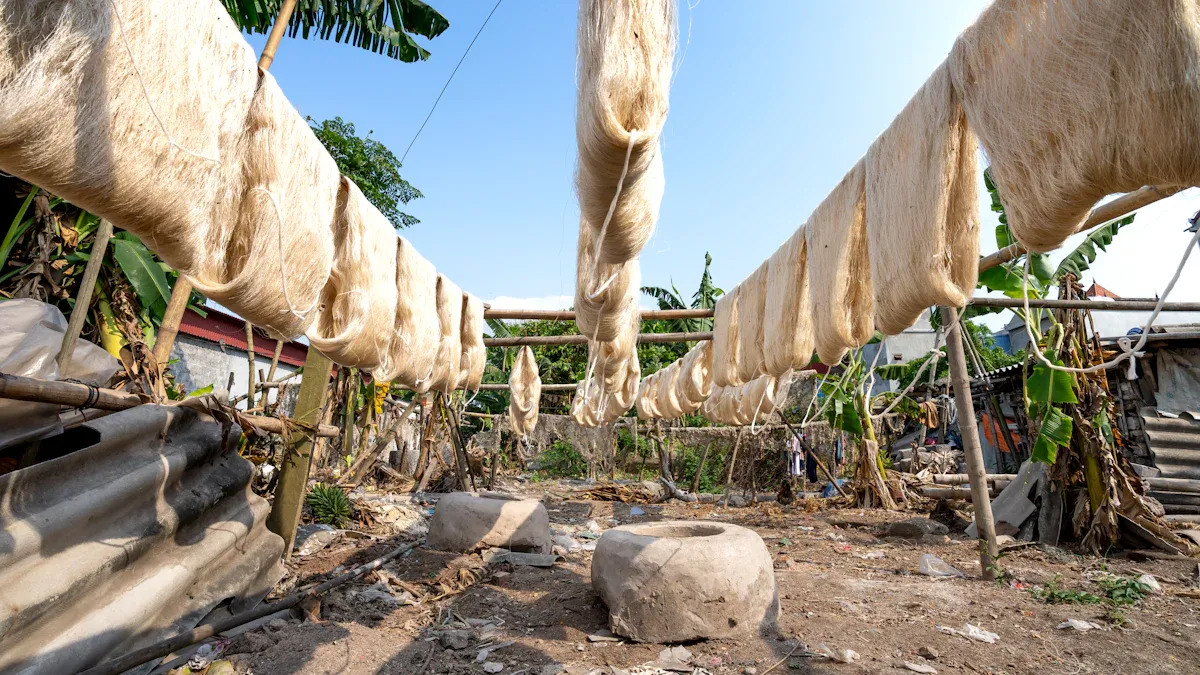
Bamboo polyester fabric, a blend of natural bamboo fibers and synthetic polyester, stands out as a sustainable fabric with versatile uses. This bamboo fabric is highly regarded due to bamboo’s rapid growth and low environmental footprint. The bamboo polyester fabric production process incorporates innovations like closed-loop systems, which not only improve the quality of the fabric but also minimize waste. As a result, this eco-friendly fabric has become a leading choice for those seeking sustainable and recycle fabric options.
Key Takeaways
- Bamboo polyester fabric mixes bamboo fibers with polyester. It is eco-friendly and useful for many purposes.
- Making this fabric uses green methods like mechanical extraction. It also uses recycled polyester to save energy and water.
- Bamboo grows fast and is good for the planet. It needs little water and grows back on its own without replanting.
Bamboo Polyester Fabric Production Process
Harvesting and Preparing Bamboo
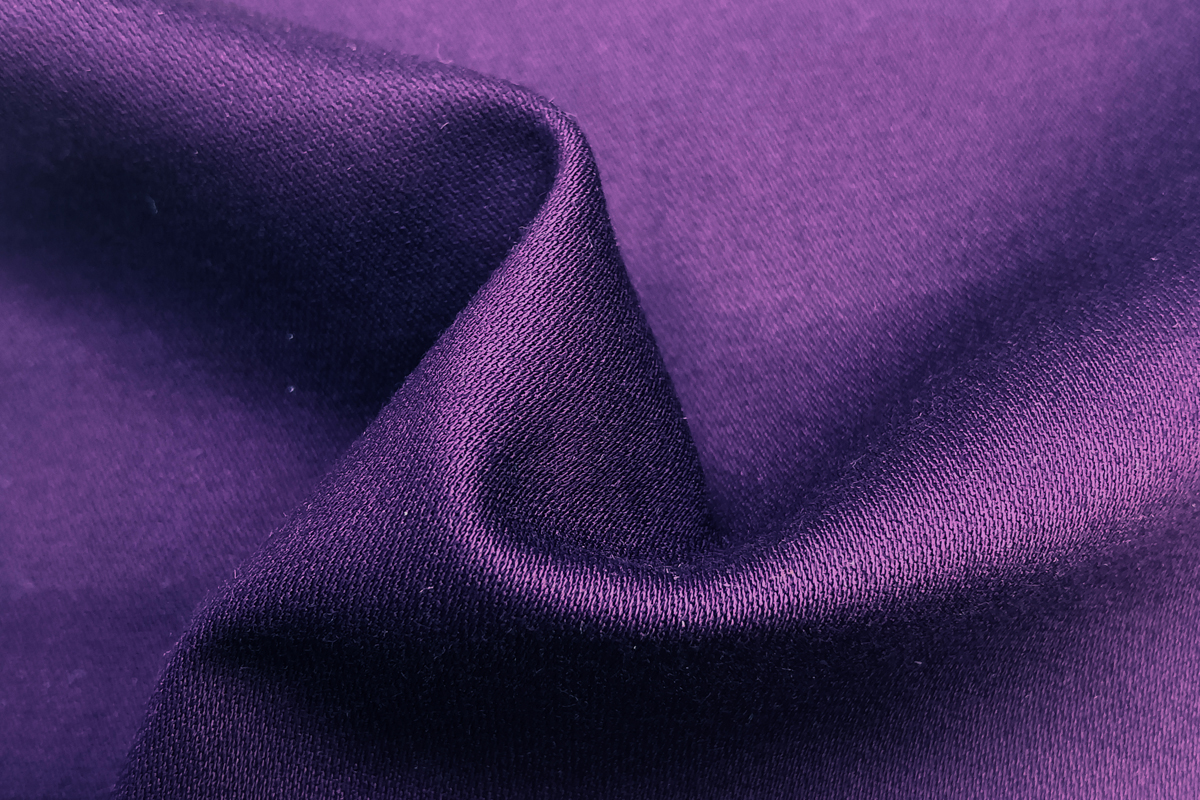
The production of bamboo polyester fabric begins with harvesting bamboo, a plant known for its rapid growth and high yield. Bamboo can grow up to 1 meter per day during its growth phase, which lasts 6 to 7 months. Typically, harvesting occurs after 3 years when the bamboo reaches maturity. This timeline ensures the plant’s strength and quality for fiber production.
- Bamboo yields nearly 40 tons per hectare annually, making it an efficient and sustainable resource.
- Its ability to re-mature within a few years allows for continuous harvesting without depleting resources.
| Evidence Type | Statistic/Fact |
|---|---|
| Growth Rate | Bamboo can re-mature in just a few years, allowing for sustainable harvesting without resource depletion. |
| Carbon Sequestration | A single bamboo plant can sequester 2 tons of CO2 in 7 years, compared to 1 ton by hardwood in 40 years. |
| Environmental Impact | Bamboo requires less water than other crops, reducing overall water consumption in agriculture. |
| Potential Carbon Savings | Planting 10 million hectares of bamboo could save over 7 gigatons of CO2 in 30 years. |
These statistics highlight bamboo’s environmental benefits, making it an ideal choice for sustainable fabric production.
Mechanical Process for Bamboo Fiber Extraction
Mechanical extraction involves breaking down bamboo into fibers without using harsh chemicals. This method preserves the natural integrity of the fibers, resulting in strong and durable materials. The process typically includes soaking bamboo strips for three days, followed by manually scraping the fibers.
- Mechanical retting produces high-quality fibers with excellent tensile strength and elasticity.
- Modifications in this process have led to thinner, more consistent yarns, improving the overall fabric quality.
| Extraction Method | Maximum Breaking Force (cN) | Minimum Breaking Force (cN) | Fiber Breaking Elongation (%) | Elastic Modulus (cN/dtex) |
|---|---|---|---|---|
| Alkali Boiling Softening | 1625.47 | 387.57 | 1.96 | 117.09 |
| Saturated Steam Softening | 1694.59 | 481.13 | 2.14 | 126.24 |
The mechanical process is labor-intensive but yields fibers with superior mechanical properties, making it a preferred method for eco-conscious manufacturers.
Chemical Process for Bamboo Fiber Extraction
Chemical extraction uses solutions like alkali treatments to break down bamboo into fibers. This method is faster and more efficient than mechanical processes but requires careful handling to minimize environmental impact.
Alkali treatment enhances the bonding between fibers, improving their mechanical properties. When combined with steam explosion, it reduces lignin and hemicellulose, increasing the fibers’ crystallinity. Optimal conditions for alkali pretreatment include a pressure of 2 MPa and a duration of 6 minutes. These parameters yield high-quality fibers suitable for blending with polyester.
While chemical methods can impact the environment, innovations like closed-loop systems help recycle chemicals, reducing waste and pollution.
Blending Bamboo Fibers with Polyester
Once bamboo fibers are extracted, they are blended with synthetic polyester to create a fabric that combines the best properties of both materials. Polyester adds durability and elasticity, while bamboo contributes softness, breathability, and antimicrobial properties.
The blending process involves spinning the fibers together to form yarns. Manufacturers carefully control the ratio of bamboo to polyester to achieve the desired fabric characteristics. For example, higher bamboo content enhances UV protection and water vapor permeability, while polyester improves abrasion resistance and tensile strength.
Weaving and Finishing the Fabric
The final steps in the bamboo polyester fabric production process involve weaving the blended yarns into fabric and applying finishing techniques. Weaving determines the fabric’s texture and strength, while finishing processes enhance its appearance and performance.
| Performance Metric | Observation |
|---|---|
| Anti-microbial Activity | Increases with higher bamboo content in both twill and plain woven fabrics. |
| Color Strength | Increases with higher bamboo content in the fabric. |
| Tensile Strength | Exhibits higher values in specific bamboo/polyester blends. |
| Abrasion Resistance | Higher in certain bamboo content blends compared to others. |
Finishing techniques may include dyeing, softening, or applying coatings to improve the fabric’s functionality. These steps ensure the final product meets industry standards and consumer expectations.
Sustainability and Ethical Considerations in Bamboo Polyester Fabric Production
Environmental Impact of Bamboo Fabric Production
Bamboo fabric production offers significant environmental benefits. I’ve observed that bamboo requires minimal water compared to other crops, making it a sustainable choice. Unlike cotton, which demands extensive irrigation, bamboo thrives in naturally rainy regions without the need for artificial watering systems. This reduces the strain on water resources. Additionally, bamboo cultivation improves local micro-climates by enhancing moisture levels and naturally filtering water for nearby communities.
Another remarkable aspect is bamboo’s ability to regenerate without replanting. Once harvested, it grows back rapidly, ensuring a continuous supply without depleting the soil. Bamboo also grows without pesticides or fertilizers, further reducing its environmental footprint. These characteristics make bamboo an eco-friendly raw material for fabric production.
- Bamboo fabric uses significantly less water than traditional textile crops.
- It regenerates naturally without replanting.
- Bamboo cultivation improves moisture levels in local micro-climates.
- It naturally filters water for nearby communities.
Comparing Mechanical and Chemical Methods
When it comes to extracting bamboo fibers, I’ve noticed that both mechanical and chemical methods have their pros and cons. The mechanical process is labor-intensive but eco-friendly. It avoids harmful chemicals, preserving the natural integrity of the fibers. However, this method requires more time and effort, which can increase production costs.
On the other hand, the chemical process is faster and more efficient. It uses solutions like alkali treatments to break down bamboo into fibers. While this method produces high-quality fibers suitable for blending with polyester, it can harm the environment if not managed responsibly. Innovations like closed-loop systems help mitigate these effects by recycling chemicals and reducing waste.
Choosing between these methods often depends on the manufacturer’s priorities. Eco-conscious producers may prefer the mechanical process, while those focused on efficiency might opt for chemical extraction with sustainable practices in place.
Role of Recycled Polyester in Sustainable Fabric
Incorporating recycled polyester into the bamboo polyester fabric production process significantly enhances sustainability. Recycled polyester uses 62% less energy than virgin polyester, making it an energy-efficient alternative. It also requires 99% less water and produces 20% fewer CO2 emissions. These reductions contribute to a lower environmental impact during the blending process.
By using recycled polyester, manufacturers not only reduce waste but also create a fabric that combines durability with eco-friendliness. This approach aligns with global efforts to minimize the environmental footprint of textile production. I believe that integrating recycled materials is a crucial step toward achieving a more sustainable fashion industry.
- Recycled polyester uses 62% less energy than virgin polyester.
- It requires 99% less water.
- It produces 20% less CO2 emissions.
Certifications for Eco-Friendly and Sustainable Fabrics
Certifications play a vital role in ensuring ethical and sustainable practices in fabric production. They provide measurable criteria for manufacturers to follow, promoting transparency and accountability. Here are some key certifications relevant to bamboo polyester fabric production:
| Certification/Standard | Description |
|---|---|
| Sustainable Fashion | Promotes and verifies responsible, ethical business practices through standardized auditing. |
| SGS | Offers independent testing and certification verifications including ISO and FSC for health and safety standards. |
| Textile Exchange | Provides certifications like GRS and OCS, focusing on sustainable materials and the UN Sustainable Development Goals. |
| WRAP | Focuses on human rights in apparel and footwear production with a three-level certification system. |
| GOTS | Certifies textiles with at least 70% organic fibers, ensuring environmentally friendly processing. |
| Fair Trade Certified | Guarantees products made under rigorous social, environmental, and economic standards, ensuring fair labor conditions. |
These certifications help consumers identify products made with sustainable and ethical practices. They also encourage manufacturers to adopt environmentally friendly methods, contributing to a more responsible textile industry.
Properties and Uses of Bamboo Polyester Fabric
Key Properties of Bamboo Polyester Fabric
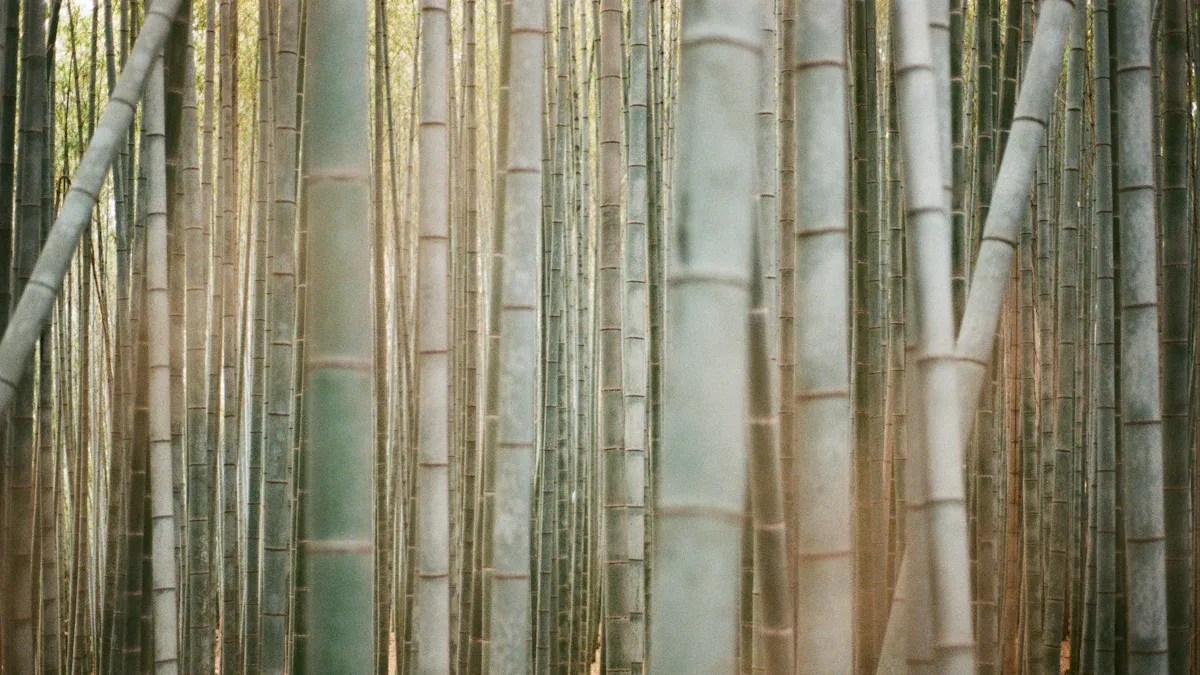
Bamboo polyester fabric offers a unique combination of performance and comfort. I’ve observed that its properties stem from the synergy between bamboo fibers and polyester. Bamboo contributes softness, breathability, and natural antibacterial qualities, while polyester enhances durability and elasticity. This blend creates a fabric that performs well in various applications.
Several quantified tests validate its performance characteristics:
- Strength and Durability: Tensile strength, tearing strength, and abrasion resistance ensure the fabric withstands wear and tear.
- Comfort and Functionality: Water vapor permeability, wickability, and moisture management capability make it ideal for activewear.
- Special Features: Anti-bacterial activity, UV protection, and dye uptake enhance its versatility.
Additionally, bamboo polyester fabric exhibits excellent air permeability and thermal resistance, making it suitable for both warm and cold climates. These properties highlight its adaptability across different uses.
Common Applications in Fashion and Textiles
The versatility of bamboo polyester fabric makes it a popular choice in the textile industry. I’ve seen it used in a wide range of products, including:
- Activewear: Its moisture-wicking and breathable properties make it perfect for sportswear and yoga apparel.
- Casual Wear: The fabric’s softness and comfort suit everyday clothing like t-shirts and dresses.
- Home Textiles: Bamboo polyester is often used in bed linens, towels, and curtains due to its durability and antibacterial qualities.
- Outdoor Gear: UV protection and thermal resistance make it ideal for outdoor clothing and accessories.
These applications demonstrate the fabric’s ability to meet diverse consumer needs while maintaining sustainability. The bamboo polyester fabric production process ensures that these products combine functionality with eco-friendliness.
The bamboo polyester fabric production process involves harvesting bamboo, extracting fibers, blending with polyester, and weaving the final fabric. Each step ensures quality and functionality. Sustainable practices, like using recycled polyester and closed-loop systems, reduce environmental impact.
I encourage you to explore bamboo polyester fabric. Its eco-friendly nature and versatility make it a smart choice for sustainable living.
Post time: Apr-27-2025