
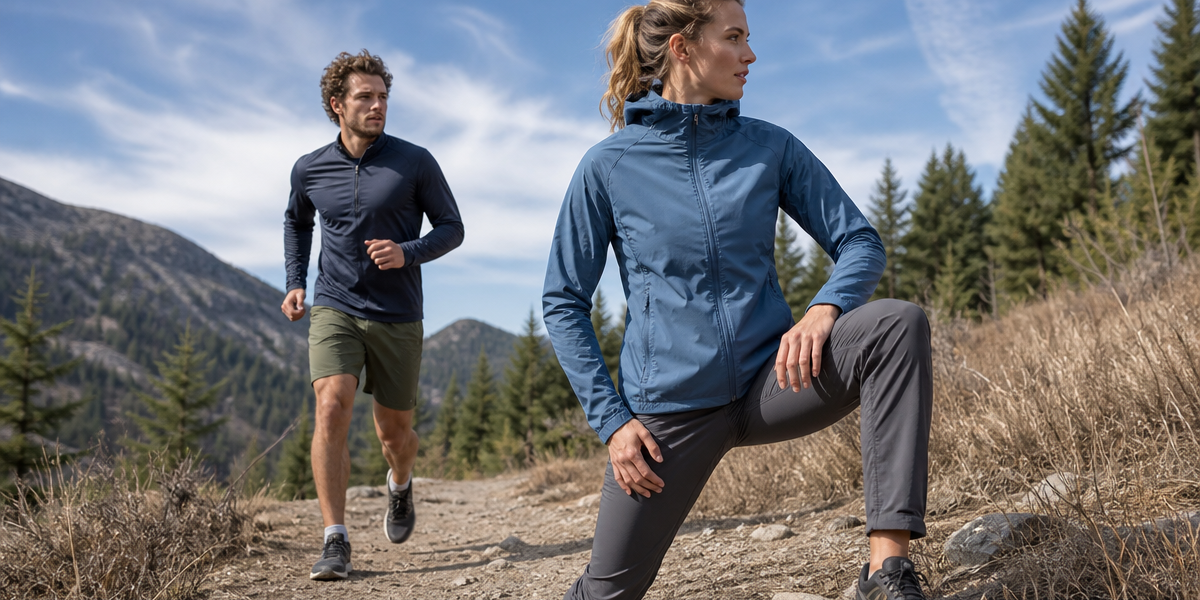
 Outdoor athletes expect fabric to do more than stretch—it must resist abrasion, block wind, manage moisture, protect against UV exposure, and stay light enough for long movement. Woven polyester stretch fabric has become a practical foundation for modern sportswear because it combines the structure of a woven textile with engineered elasticity from spandex or elastane. With common weights around 150–250 GSM and performance targets such as 20,000–30,000 Martindale abrasion cycles, it gives brands a measurable way to balance durability, comfort, and cost. This article examines how the material works, where it excels, and what trade-offs designers should manage.
Why Woven Polyester Fabric Is a Strategic Choice
When evaluating materials for high-performance outdoor sportswear, woven polyester fabric provides a highly functional baseline. Unlike standard knits, which can lack durability and structure, the tightly interlaced architecture of a woven textile provides the mechanical integrity necessary to withstand harsh environments while maintaining a remarkably lightweight profile.
Over the years, the evolution of synthetic fibers has transformed polyester from a rigid, heavy material into a dynamic, adaptable foundation for modern activewear. By engineering the weave and blending advanced yarns, manufacturers can fine-tune the fabric to meet the exact demands of outdoor athletes, balancing ruggedness with essential mobility. While nylon often exceeds polyester in absolute abrasion resistance for premium alpine applications, polyester offers superior hydrophobic properties, inherent UV resistance, and cost-efficiency, making it an exceptionally versatile alternative.
What Defines Polyester Stretch Woven Fabric
At its core, a stretch woven textile integrates traditional polyethylene terephthalate (PET) yarns with elastomeric fibers, typically spandex or elastane. In the outdoor industry, a standard stretch woven textile will often feature an elastane content ranging from 8% to 15%, depending on whether a two-way or four-way stretch is required.
The woven construction inherently resists pilling and snagging far better than knits, making it highly durable on the trail. Furthermore, these fabrics usually fall within a versatile weight band of 150 to 250 grams per square meter (GSM). This specific weight range offers an optimal strength-to-weight ratio, allowing designers to craft garments that do not burden the athlete while still providing substantial environmental protection. The texturing process of PET yarns also plays a role, creating microscopic air pockets that slightly improve thermal retention even in unlined woven variants.
Limitations and Mitigations: It is important to acknowledge certain trade-offs when specifying this material. Woven polyesters can retain odors more than natural fibers, a drawback often mitigated by applying antimicrobial finishes. They may exhibit inferior stretch recovery compared to pure knits, requiring precise elastane blending. Additionally, they can produce fabric noise during movement and contribute to microplastic shedding during washing, prompting the industry to explore denser weaves and advanced filtration during manufacturing.
Key Outdoor Apparel Requirements
Outdoor environments demand fabrics that can endure rigorous physical stress without compromising the wearer’s mobility or comfort. As an illustrative benchmark, standard woven polyester often targets 20,000 to 30,000 cycles on the Martindale abrasion test. While 20,000 cycles represents a solid mid-range benchmark for general technical outerwear, premium alpine gear—often utilizing nylon blends—may demand 50,000 cycles or more to withstand severe rock friction and the repetitive wear of heavy backpack straps.
Additionally, these materials frequently offer reliable UV resistance—often achieving a UPF rating of 50+ to protect against intense high-altitude sun exposure—and rapid moisture-wicking capabilities. By tightly weaving fine polyester yarns, manufacturers create a mechanical barrier against wind, fulfilling a critical requirement for alpine and trail apparel. The precise integration of these performance features makes woven polyester an indispensable asset in any technical sportswear line.
How Woven Polyester Fabric Balances Performance
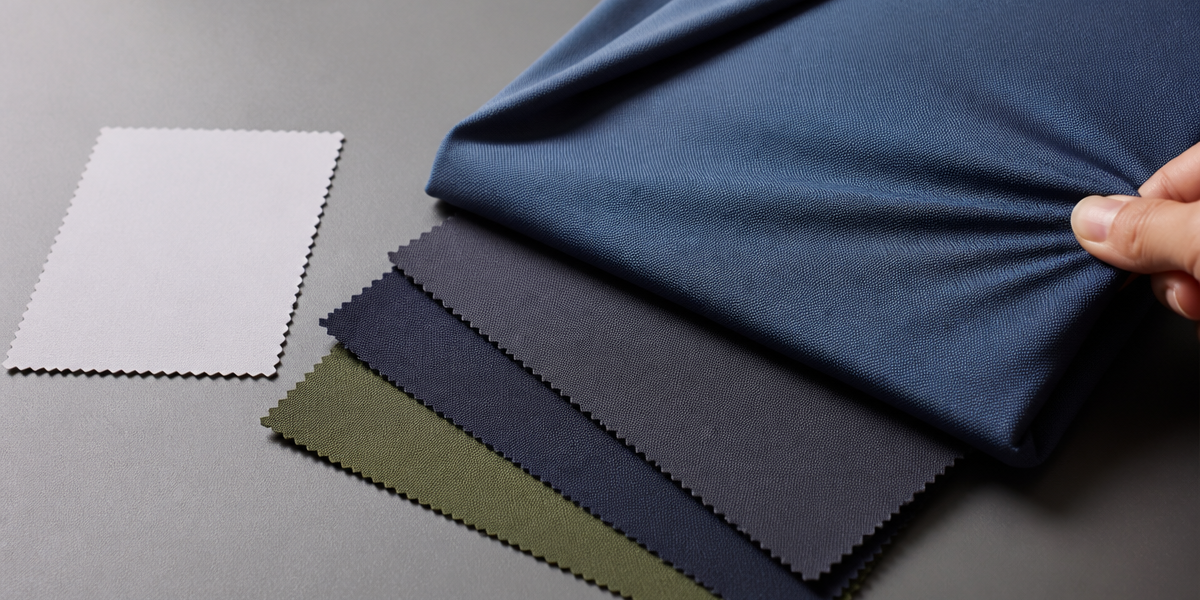 Balancing protection against the elements with internal climate control is a primary challenge in sportswear design. Woven polyester achieves this delicate equilibrium through advanced engineering, combining inherent mechanical properties with specialized chemical treatments and multi-layer lamination processes.
Rather than relying on a single thick layer, modern outdoor fabrics utilize a composite approach, ensuring that windproofing, waterproofing, and thermal regulation work in tandem without restricting movement. It is crucial, however, to distinguish between stretch woven softshells—which prioritize breathability and mobility—and bonded three-layer hardshells, which are engineered specifically for maximum waterproofing.
Weather Resistance and Breathability
To perform in variable conditions, a waterproof outdoor textile relies heavily on durable water repellent (DWR) finishes—increasingly transitioning to eco-friendly C0 fluorocarbon-free formulas—and internal breathable laminations. When evaluating hardshell laminates, weather resistance is typically assessed using the hydrostatic head test. High-performance hardshells often aim to withstand a minimum water column of 10,000mm, with premium alpine gear frequently exceeding 20,000mm.
Simultaneously, breathability is measured by the Moisture Vapor Transmission Rate (MVTR). A quality active fabric generally targets an MVTR of at least 15,000 g/m²/24h to help prevent sweat accumulation and subsequent chilling during high-exertion activities. Furthermore, the fabric’s surface must be compatible with seam-sealing tapes, requiring a precise melting point and surface energy to ensure waterproof integrity at the garment’s joints.
It is critical to note that test standards for these metrics vary significantly. Comparing unqualified numbers across different methods (such as JIS L 1099 A-1 versus ASTM E96 for MVTR) can be misleading for procurement teams, as they yield vastly different results for the same fabric.
| Performance Tier | Hydrostatic Head (mm) | Breathability (MVTR) | Typical Application |
|---|---|---|---|
| Entry-Level | 5,000 – 10,000 | 5,000 – 10,000 g/m²/24h | Light hiking, urban outdoor |
| Mid-Range | 10,000 – 15,000 | 10,000 – 15,000 g/m²/24h | Trekking, softshell jackets |
| Professional | 20,000+ | 20,000+ g/m²/24h | Alpine mountaineering |
Stretch, Construction, Yarn, and Finishes
The structural integrity of a woven polyester bonded fabric designed for professional gear relies on its multi-layered construction and precise yarn selection. Many technical garments utilize a ripstop weave, characterized by thicker reinforcement threads interwoven at regular intervals—typically 5mm to 8mm apart—to prevent tear propagation.
When combined with a Thermoplastic Polyurethane (TPU) membrane and a brushed fleece backing, the resulting softshell composite offers thermal insulation alongside dynamic 4-way stretch. To ensure longevity, the lamination process typically targets a peeling strength benchmark (such as 15 N/cm) to help prevent the layers from delaminating after repeated washing. This complex yarn architecture ensures the garment moves fluidly with the athlete while maintaining a steadfast structural barrier against cold winds.
How to Select Woven Polyester Fabric for Outdoor Apparel
Translating theoretical performance into a highly functional finished garment requires a rigorous approach to material procurement. Sourcing woven polyester for new outdoor apparel lines relies on strict testing protocols and precise decision criteria.
By establishing clear benchmarks early in the development phase, brands can ensure the final product meets end-user
Key Takeaways
- Specify polyester stretch woven fabric with about 8% to 15% elastane when outdoor garments need controlled two-way or four-way mobility.
- Use the 150 to 250 GSM range as a practical starting point for balancing lightweight comfort with trail-ready durability.
- Target 20,000 to 30,000 Martindale abrasion cycles for general technical outerwear, while reserving higher-performance nylon blends for severe alpine abrasion.
- Prioritize woven polyester for sportswear that needs hydrophobic behavior, reliable UV resistance, wind blocking, and cost-efficient performance.
- Reduce common polyester drawbacks by choosing antimicrobial finishes, precise elastane blends, denser weaves, and responsible manufacturing controls.
Frequently Asked Questions
What is polyester stretch woven fabric?
It is a tightly woven PET polyester fabric blended with elastane or spandex, often around 8% to 15%, to add two-way or four-way stretch for active outdoor movement.
Why is woven polyester useful for outdoor sportswear?
Its woven structure improves durability, wind resistance, snag resistance, and shape stability while keeping garments lightweight enough for hiking, trail running, and technical outerwear.
What fabric weight is common for stretch woven outdoor apparel?
Many polyester stretch woven fabrics fall between 150 and 250 GSM, a practical range for balancing strength, mobility, packability, and weather protection.
How durable is woven polyester compared with nylon?
Polyester offers strong durability and better hydrophobic and UV-resistant properties, while nylon usually performs better in extreme abrasion conditions such as alpine climbing or heavy pack wear.
Does polyester stretch woven fabric protect against sun exposure?
Yes, many technical woven polyester fabrics can achieve UPF 50+ protection, making them suitable for high-altitude, open-trail, and extended outdoor use.

Yunai Textile
Post time: Aug-21-2026