

Why More School Uniform Brands Are Choosing Stretch Woven Fabrics
In recent years, school uniform designs have been evolving to meet the changing needs of students and educational institutions. One of the most significant shifts in the schoolwear industry is the increasing adoption of stretch school uniform fabric. This modern fabric choice reflects a new era in uniform comfort, functionality, and style, ensuring that students can stay comfortable and confident throughout their school day.
Meeting the Demands of Active Students
Children are naturally active, and their school day is often filled with a variety of physical activities—from running between classes to participating in sports and playground games. Traditional school uniform fabrics, such as 100% polyester or standard TR blends, can sometimes feel restrictive and uncomfortable during these movements.
Stretch woven fabrics solve this problem by incorporating a small percentage of spandex or elastane into the textile. This provides subtle stretch and flexibility, allowing uniforms to move with the student rather than constraining them. Students can bend, reach, and run freely without worrying about tearing seams or feeling uncomfortable. For parents and school administrators, this translates into uniforms that are more durable and require less frequent replacement.
Upgrading Comfort for Modern Schoolwear
Comfort has become a critical factor in school uniform design. While traditional fabrics focused on durability and ease of care, modern parents and schools increasingly prioritize fabrics that offer comfort throughout the day. Stretch school uniform fabrics provide a soft, breathable feel while maintaining the structure and appearance of classic uniforms.
These fabrics are designed to adapt to the body’s movements, reducing pressure points and friction. For example, pleated skirts, trousers, and fitted blazers made with stretch woven fabrics no longer restrict leg or arm movements, which is particularly important for younger students. In addition, these fabrics often have enhanced moisture management properties, which keep students feeling fresh even during hot or humid days.
Reflecting the Next Generation of School Uniform Trends
The choice of fabric significantly impacts the overall look and feel of school uniforms. Stretch woven fabrics allow designers to create garments that combine traditional aesthetics with modern comfort. Schools can maintain the polished, professional appearance of uniforms while offering garments that cater to contemporary student needs.
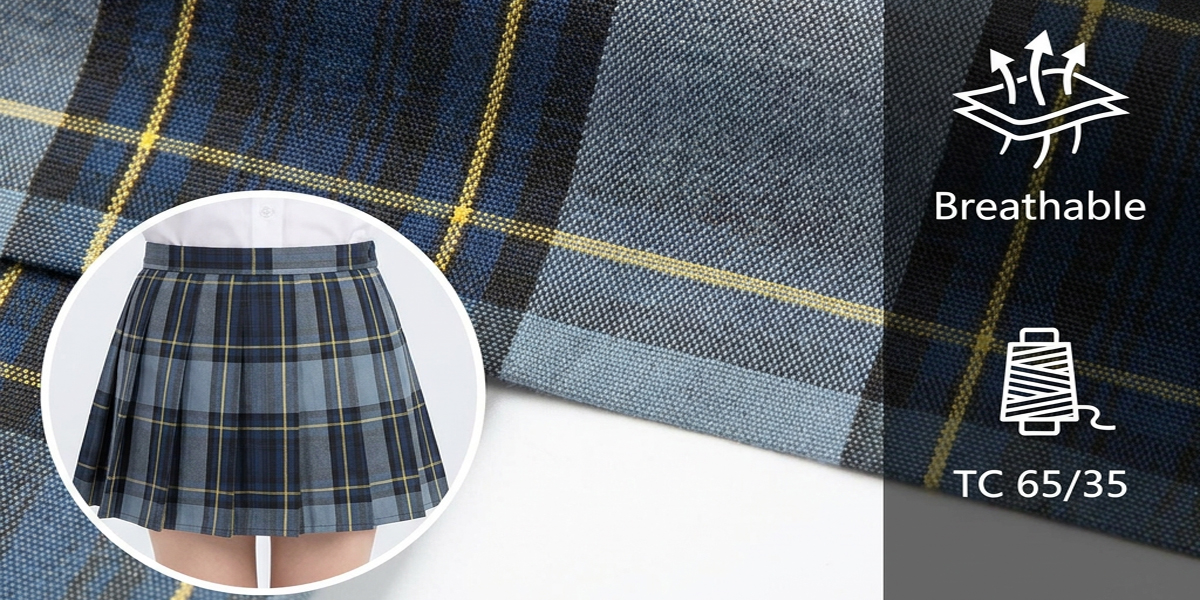
Moreover, stretch fabrics are versatile in style. They can be woven into classic tartans, subtle plaids, or solid colors without compromising the uniform’s structure. This flexibility is particularly beneficial for uniforms that must meet strict school dress codes while still appealing to students’ comfort expectations.
Advantages for Schools and Parents
Adopting stretch school uniform fabric brings tangible benefits beyond comfort. For schools, these fabrics tend to have excellent shape retention, meaning blazers, skirts, and trousers maintain their crisp lines after repeated wear and washing. This reduces the frequency of replacements and ensures that students always look neat.
For parents, stretch fabrics are easier to care for at home. Many are wrinkle-resistant and require minimal ironing, making daily maintenance simpler. Additionally, the durability of these fabrics reduces the likelihood of wear and tear, offering a longer lifespan for each uniform piece—a crucial factor for families with multiple children or tight budgets.
Sustainability Considerations
In addition to comfort and functionality, sustainability is an emerging concern in school uniform production. Many modern stretch woven fabrics are engineered to minimize water and energy consumption during manufacturing and washing. Durable fabrics reduce waste over time by lasting longer, while advanced fiber blends can be recycled or produced with lower environmental impact. This aligns with the growing interest of schools and parents in sustainable, eco-friendly clothing options.
Popular Fabric Compositions
Common compositions for stretch school uniform fabric include blends such as TR (polyester/rayon) with 2–5% spandex. These blends provide an optimal balance between durability, comfort, and flexibility. The addition of spandex allows for a gentle stretch without altering the fabric’s woven appearance, preserving the professional aesthetic of school uniforms.
Many brands also experiment with yarn-dyed plaids using stretch fabrics. These fabrics not only maintain vibrant colors and patterns but also offer the same flexibility and comfort as solid-colored blends. As a result, students can enjoy stylish uniforms that do not compromise their movement or comfort.
The Future of School Uniform Design
The shift towards stretch school uniform fabric is more than a trend—it reflects a broader understanding of students’ needs in modern education. Comfortable, flexible uniforms can enhance concentration, participation, and overall satisfaction with school life. As more schools adopt this type of fabric, it is likely that stretch woven fabrics will become the standard rather than the exception in school uniform design.
Furthermore, the versatility of these fabrics opens doors to innovative uniform designs, including seasonal adjustments, unisex garments, and performance-enhanced clothing suitable for sports or extracurricular activities. By choosing stretch fabrics, schools and uniform brands are investing in a practical, stylish, and forward-thinking solution.
Conclusion
As student activity levels, comfort expectations, and uniform standards evolve, school uniform brands are increasingly turning to stretch school uniform fabrics. These fabrics provide the perfect balance of flexibility, durability, and style, ensuring that students can move freely while maintaining a professional appearance. With benefits for both schools and parents, stretch woven fabrics are shaping the next generation of school uniforms—comfortable, functional, and ready for modern student life.
By embracing stretch fabrics, schools can offer uniforms that are not only aesthetically pleasing but also highly practical, durable, and aligned with contemporary educational needs. For parents and students alike, this represents a meaningful upgrade in comfort and satisfaction, making school life easier and more enjoyable.

Yunai Textile
Post time: Jun-12-2026