
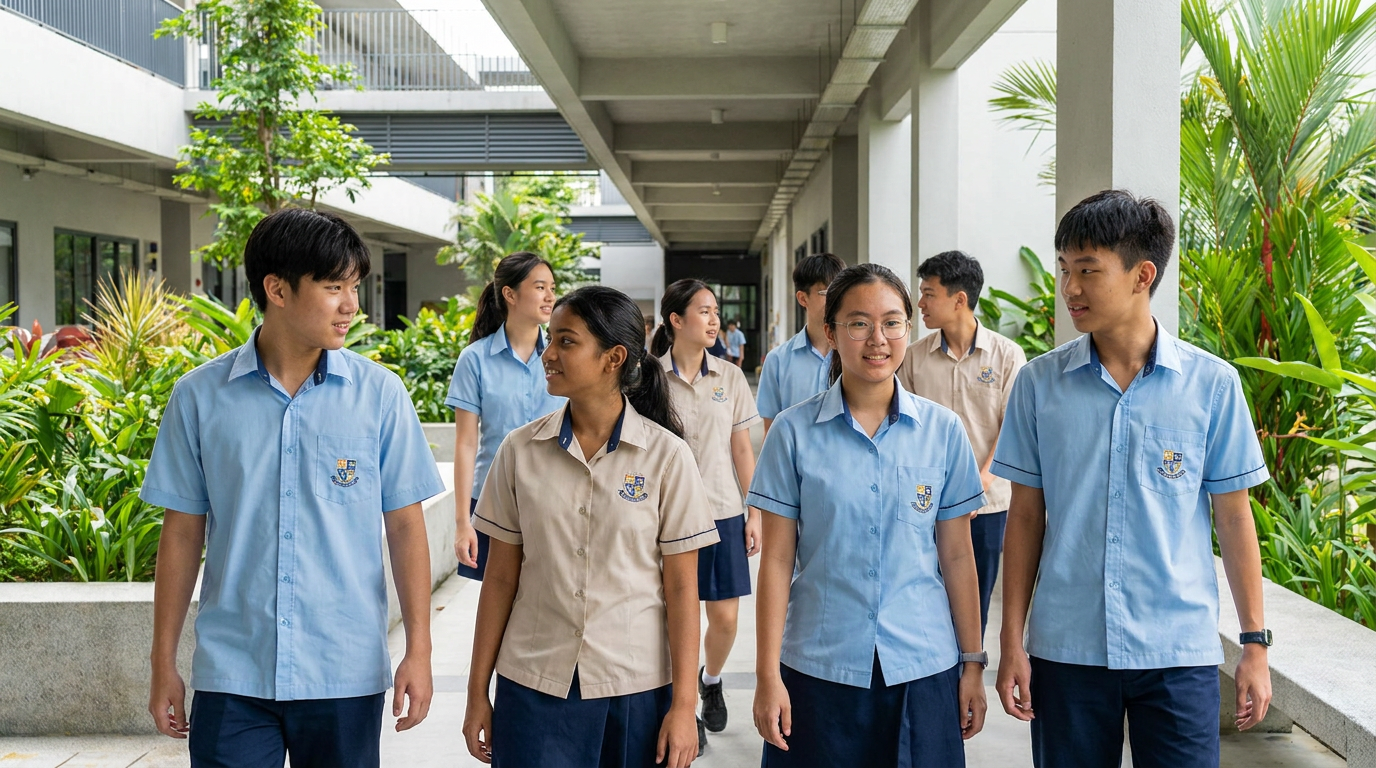
Why Tropical Climates Require High-Performance Uniform Fabrics
Southeast Asia experiences high temperatures and heavy humidity throughout most of the year. Students often spend long hours outdoors during assemblies, sports activities, and transportation between school and home.
Traditional cotton-rich fabrics can absorb large amounts of moisture, making uniforms feel heavy and uncomfortable after extended wear. Polyester school uniform fabric solves this issue because it dries faster and retains a cleaner appearance during the day.
This is one reason why many buyers searching online use terms such as:
- “best fabric for tropical school uniforms”
- “quick dry school uniform fabric supplier”
- “easy maintenance uniform fabric for students”
Polyester fabrics are engineered to provide better moisture management and improved dimensional stability under repeated washing conditions.
Easy Care Fabrics Reduce Parent Complaints
Schools and uniform brands are no longer selecting fabrics based only on appearance. Parents now expect uniforms to be easy to wash, quick to dry, and resistant to wrinkles.
Polyester school uniform fabric performs exceptionally well in these areas because:
- It dries faster than cotton fabrics
- It maintains shape after washing
- It requires less ironing
- It resists shrinkage
- It has better wrinkle recovery
In many Southeast Asian households, uniforms are washed multiple times per week. Easy-care performance directly affects purchasing decisions.
This is especially important for wholesale buyers supplying large school chains, because parents frequently complain about:
- uniforms losing shape
- excessive fading
- difficult ironing
- collars becoming distorted
- skirts losing pleats
Choosing high-quality polyester woven fabrics significantly reduces these issues.
Cost Control Is a Major Factor in School Procurement
School purchasing departments must balance quality with affordability. Large schools may purchase thousands of uniforms every academic year.
Compared with premium natural fiber fabrics, polyester school uniform fabric offers excellent long-term value because:
- raw material pricing is more stable
- bulk production is easier
- color consistency is more reliable
- fabric wastage is lower
- replacement cycles are longer
For distributors and brands bidding on school projects, controlling fabric cost while maintaining quality is critical.
This explains why procurement managers often search:
- “affordable durable school uniform fabric”
- “bulk school uniform fabric supplier”
- “cost effective polyester uniform fabric”
Polyester fabrics allow brands to maintain competitive pricing while still meeting durability standards.
Durability Matters for Active Students
School uniforms must survive constant movement, friction, and frequent washing. Students run, sit on rough surfaces, carry heavy bags, and participate in outdoor activities daily.
High-quality polyester school uniform fabric typically provides:
- better abrasion resistance
- stronger seam stability
- improved tensile strength
- longer garment lifespan
For school uniform suppliers, durability directly affects brand reputation.
Many buyers today specifically ask about:
- pilling resistance
- tear strength
- color fastness
- washing durability
- seam slippage
This has pushed fabric manufacturers to develop upgraded polyester woven fabrics with improved yarn quality and finishing technologies.
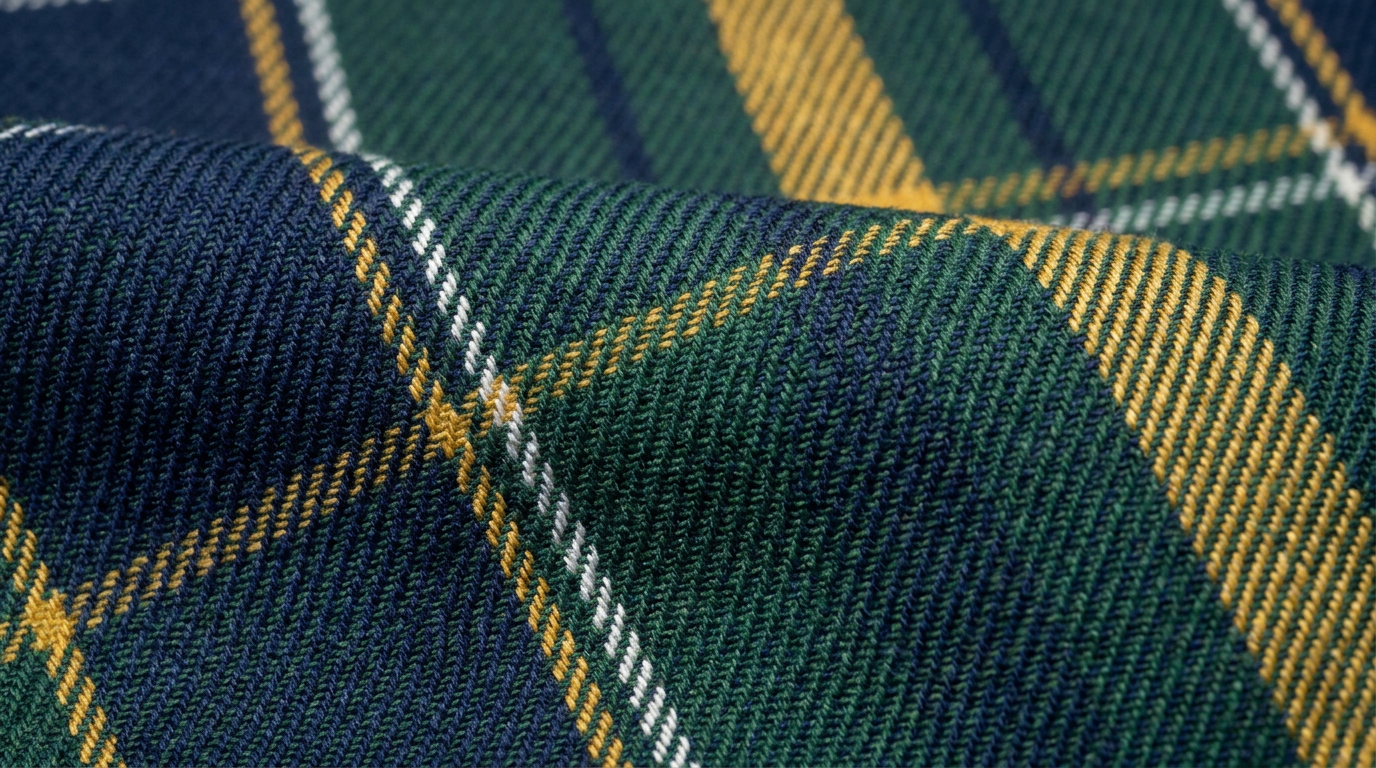
Why Polyester Works Well for Plaid School Uniforms
Plaid school uniforms remain highly popular across Southeast Asia, especially in private schools and international schools.
Polyester yarn-dyed fabrics are ideal for plaid designs because they offer:
- stable color performance
- strong pattern definition
- excellent pleat retention
- reduced distortion after washing
Many modern school uniform collections now combine polyester with small amounts of spandex to improve comfort and movement.
This trend is growing particularly fast among younger student-focused brands seeking more modern uniform aesthetics.
Sustainability and Long-Term Fabric Performance
While sustainability discussions continue across the textile industry, schools are also prioritizing long-lasting fabrics that reduce replacement frequency.
Durable polyester school uniform fabric contributes to this goal because garments can maintain acceptable appearance over longer periods.
Additionally, many textile mills now offer:
- recycled polyester options
- GRS-certified yarns
- low-water dyeing technologies
- eco-friendly finishing methods
As sustainability becomes part of procurement standards, suppliers capable of offering recycled polyester school uniform fabric will gain a stronger competitive advantage.
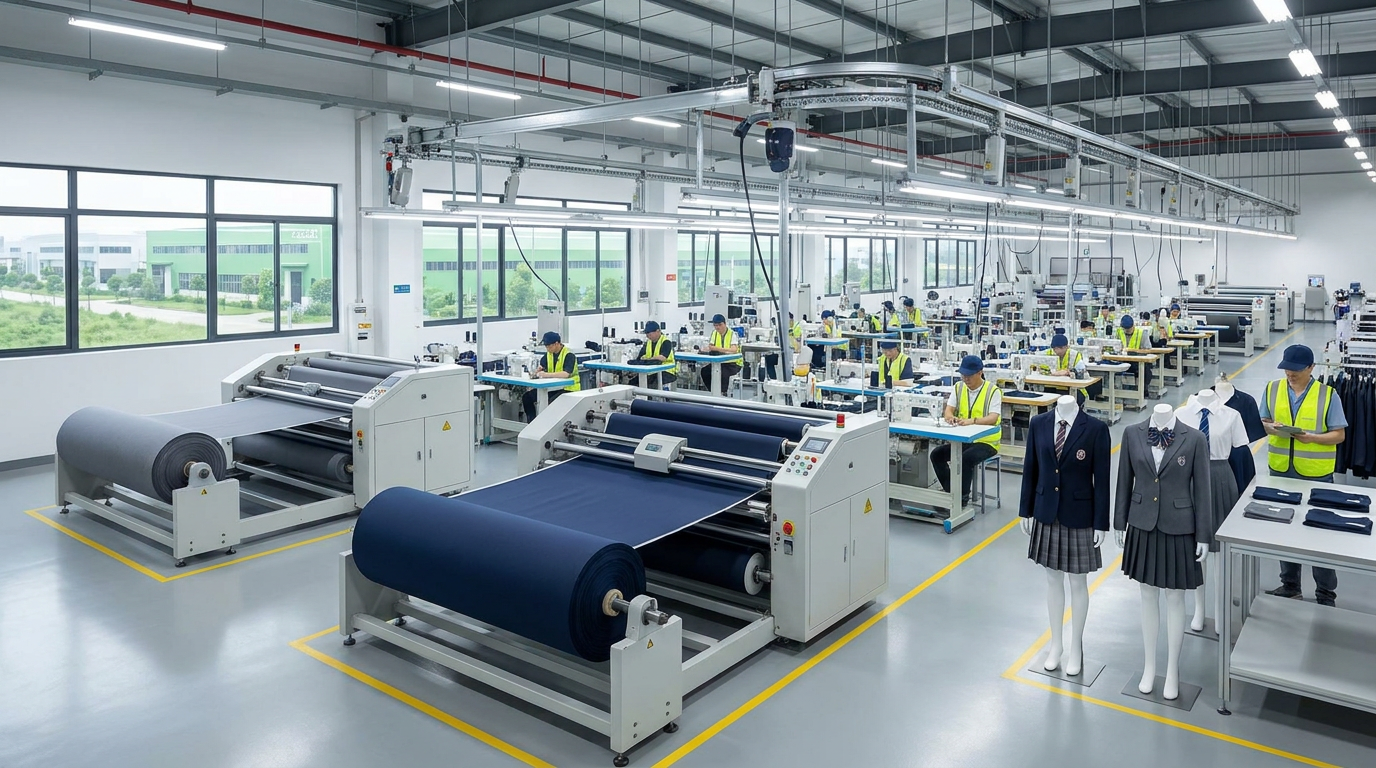
How Fabric Suppliers Can Win More School Uniform Buyers
For textile manufacturers and wholesalers targeting Southeast Asia, successful school uniform fabric marketing should focus on solving real purchasing problems.
Instead of only promoting fabric composition, suppliers should emphasize:
- tropical climate comfort
- wrinkle resistance
- long-term durability
- easy maintenance
- cost efficiency
- stable bulk production
Buyers increasingly prefer suppliers who can provide:
- fast sampling
- consistent repeat orders
- color matching support
- low MOQ flexibility
- garment application recommendations
Professional product presentation, technical testing data, and clear usage recommendations are becoming major decision-making factors.
Conclusion
The popularity of polyester school uniform fabric in Southeast Asia is driven by practical performance advantages rather than short-term trends. Schools require fabrics that can withstand tropical climates, frequent washing, active students, and strict procurement budgets.
For uniform brands, wholesalers, and fabric distributors, polyester remains one of the most reliable solutions for balancing durability, appearance, comfort, and affordability.
As the market evolves, suppliers who combine advanced polyester technologies with modern uniform design trends will continue to lead the Southeast Asian school uniform industry.

Yunai Textile
Post time: May-23-2026