
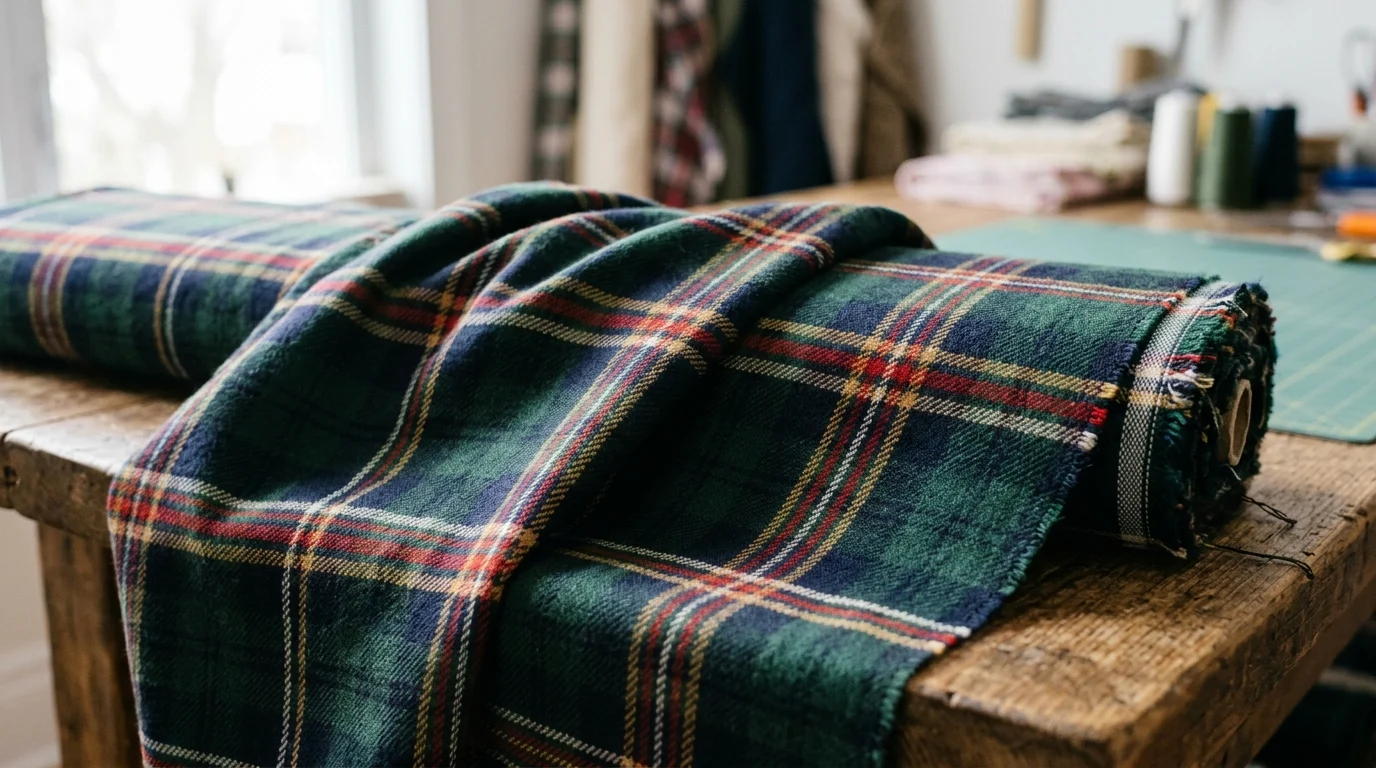
Why Yarn-Dyed School Plaid Fabric Matters
Procuring textiles for educational institutions requires balancing rigorous durability standards with precise institutional branding. Yarn-dyed school plaid fabric stands as the foundation of traditional uniform programs. It is engineered to withstand the intense, high-frequency laundering typical of academic environments—often validated by rigorous standardized colorfastness and abrasion lab tests—without compromising structural integrity or visual identity. Unlike superficial coloration methods, the yarn-dyeing process infuses color into spun yarn before weaving, distinguishing it from stock-dyed goods where unspun fibers are colored. This creates a deeply embedded pattern that defines premium uniform apparel.
For procurement directors, the initial investment in yarn-dyed textiles yields long-term dividends by drastically reducing the replacement rate of uniform components, thereby stabilizing costs for both educational institutions and families.
Commercial Risk and Brand Continuity
Institutional uniform programs span decades, making brand continuity a paramount commercial concern. A school’s proprietary tartan or plaid acts as a visual trademark; any deviation in color matching or pattern scale undermines this identity. To mitigate this, buyers must mandate strict spectrophotometer tolerances in their supplier contracts. Premium programs often target an aspirational Delta E (ΔE) color difference of less than 1.0 for primary colors as a top-tier benchmark, though multi-color plaids frequently accept CMC tolerances or higher ΔE values for secondary shades depending on the program’s strictness.
Failure to maintain this consistency results in the highly visible “mixed-batch effect,” where students in the same cohort appear to wear entirely different uniform variations. By utilizing pre-dyed yarns, manufacturers meticulously control the color formulation of each thread, significantly mitigating the commercial risk associated with dye lot discrepancies over multi-year contract lifecycles.
Yarn-Dyed Plaid vs. Printed Plaid
The structural differences between yarn-dyed and printed textiles dictate their respective performance trajectories in high-wear environments. Printed plaids apply color to the surface of a greige fabric, leaving the reverse side blank and rendering the pattern susceptible to rapid abrasion. In contrast, yarn-dyed fabrics weave the pattern directly into the textile, producing a reversible fabric with identical vibrancy on both faces.
| Specification | Yarn-Dyed Plaid | Printed Plaid |
|---|---|---|
| Color Penetration | Deep, uniform penetration | Surface level only |
| Wash Fastness | High (Maintains vibrancy through repeated cycles) | Low to Medium (Varies by ink chemistry and substrate) |
| Pattern Reversibility | Fully reversible | Single-sided |
| Setup Cost | Higher (Requires precise yarn calculation) | Lower (Standard screen/digital setup) |
| Production Lead Time | 45-60 days | 20-30 days |
While printed alternatives offer lower upfront costs and effectively serve budget constraints or occasional-wear programs, they suffer from “frosting”—a phenomenon where surface dyes abrade to reveal the white core of the yarn. Additionally, buyers must account for garment-level economics: yarn-dyed plaids require precise pattern matching during cutting and sewing, which significantly increases fabric consumption and labor costs beyond the per-meter fabric price. For core daily uniform items and long-term deployments, yarn-dyed construction remains the undisputed standard for maintaining aesthetic integrity.
Key Specifications for Performance and Cost
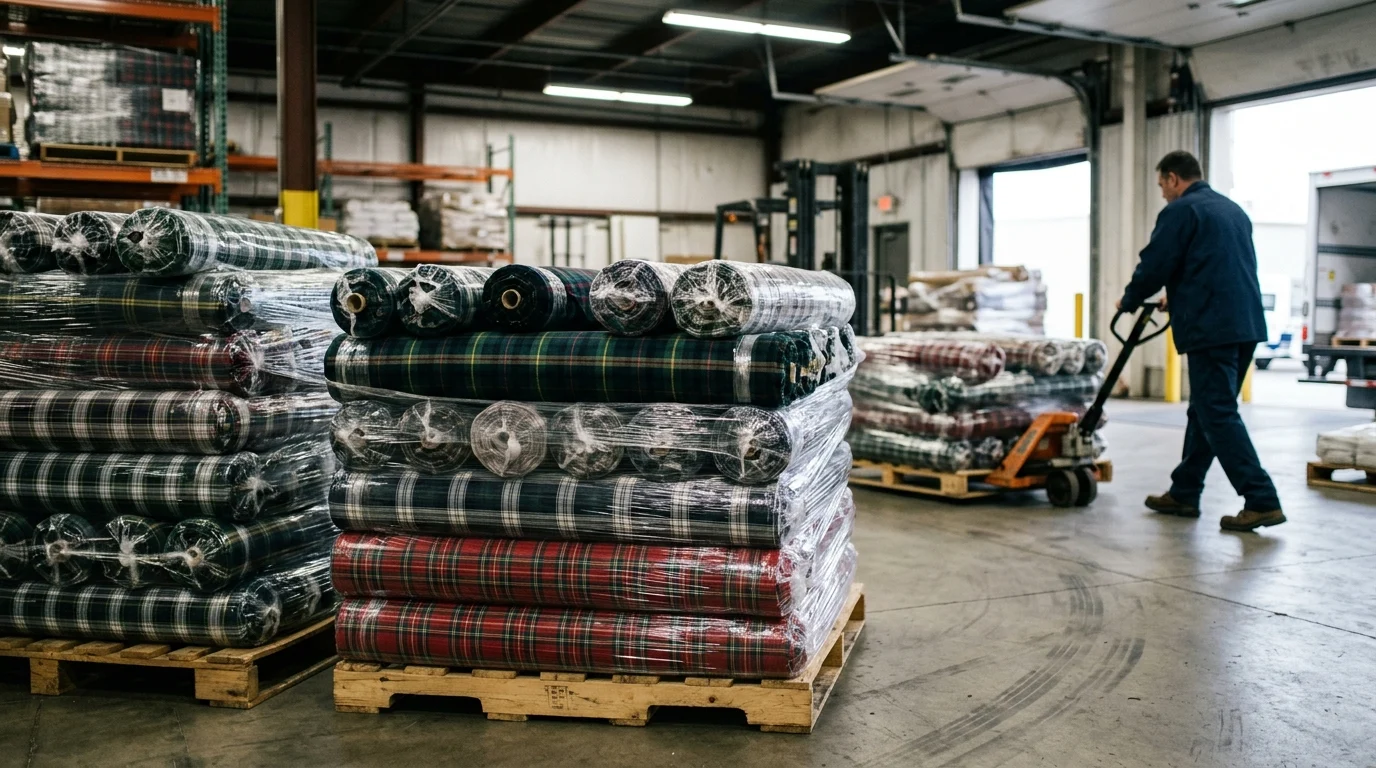
Engineering the optimal fabric for school uniforms requires a precise calculus of technical specifications. Procurement teams must clearly define performance parameters to suppliers to ensure the final product meets both budgetary limits and rigorous daily wear expectations.
Fiber, Yarn, Weave, Weight, Shrinkage, and Colorfastness
While the most prevalent fiber composition for modern educational apparel is a 65/35 Polyester/Viscose (T/R) blend—leveraging the tensile strength of polyester and the breathable drape of viscose—institutional needs vary widely. Buyers in colder climates frequently specify wool-rich blends for thermal insulation, whereas budget-conscious programs may opt for 100% polyester tiers. Conversely, cotton blends are often selected to maximize comfort in warmer regions.
Regardless of the chosen blend, procurement teams should evaluate the following parameters using measurable benchmarks:
- Yarn and Weave: Specify yarn counts (e.g., 32s/2 or 40s/2) and weave patterns (such as a durable 2/2 twill) to ensure structural density and longevity.
- Weight: For heavier winter garments, weights generally range between 240 gsm and 280 gsm, whereas tropical or summer variations sit closer to 180 gsm to 220 gsm.
- Shrinkage: Dimensional stability is non-negotiable. Rigorous shrinkage testing (e.g., AATCC 135) must confirm that the fabric shrinks less than 3% in both warp and weft directions after three wash cycles.
- Colorfastness: Resistance to washing (ISO 105-C06) and rubbing (ISO 105-X12) must achieve a minimum rating of Grade 4 to prevent dye bleeding onto adjacent white uniform components, such as blouses or shirts.
Furthermore, modern procurement policies increasingly mandate documented safety data alongside physical performance metrics. Buyers should require chemical compliance documentation—such as Oeko-Tex Standard 100 certification or adherence to the EU’s REACH regulation—to ensure fabrics are free from harmful substances and meet specific school-district environmental restrictions.
Durability Evaluation for Schools and Garment Manufacturers
Garment manufacturers rely on standardized laboratory evaluations to validate textile longevity. The Martindale abrasion test is a critical benchmark; heavy-duty premium skirt fabric often targets 25,000 to 30,000 rubs as a high-performance benchmark before exhibiting significant yarn breakage, though standard apparel-grade norms may accept lower thresholds. Pilling resistance is equally critical, evaluated via the modified Martindale method. Premium tiers typically aim for a Grade 4 rating at 2,000 cycles, ensuring the fabric surface remains smooth and free of pilling.
For pleated skirts and kilts, the fabric’s thermoplastic properties are vital. High polyester content allows for permanent pleat setting under high-temperature industrial pressing (typically around 180°C). Uniform suppliers must verify that the woven structure possesses sufficient density—often utilizing the aforementioned 2/2 twill weave—to hold a crisp crease through repeated domestic laundering without requiring daily ironing.
Sourcing, Approval, and Reordering Process
Establishing a robust supply chain with reliable school uniform fabric manufacturers involves navigating a highly structured procurement lifecycle. From the initial design phase to bulk delivery, meticulous approval protocols are necessary to secure reproducibility over a multi-year contract.
Plaid Artwork Confirmation Steps
The creation of a proprietary plaid begins with CAD (Computer-Aided Design) drafting to establish the
Key Takeaways
- Choose yarn-dyed plaid when uniforms must withstand frequent laundering while maintaining color depth and institutional identity.
- Set measurable color tolerances, such as Delta E or CMC limits, to prevent mixed-batch appearance across multi-year uniform contracts.
- Expect yarn-dyed plaid production to take about 45–60 days because yarn dyeing, pattern calculation, and weaving setup require precision.
- Compare total garment cost, not just fabric price, because plaid matching during cutting and sewing increases consumption and labor.
- Use printed plaid only for lower-budget or occasional-wear programs where surface fading and reduced abrasion resistance are acceptable.
Frequently Asked Questions
What makes yarn-dyed plaid better for school uniforms?
Yarn-dyed plaid is woven from pre-dyed yarns, so the pattern runs through the fabric instead of sitting on the surface. This improves wash fastness, abrasion resistance, and long-term color consistency for high-use school uniform programs.
How is yarn-dyed plaid different from printed plaid?
Printed plaid applies color to the fabric surface, while yarn-dyed plaid creates the pattern during weaving. Yarn-dyed fabric is typically reversible, more durable, and less likely to fade or show white yarn cores after repeated wear.
Why do schools need strict color matching for plaid uniforms?
A school plaid often functions as part of the institution’s visual identity. Tight color tolerances, such as low Delta E or CMC standards, help avoid visible batch differences across multi-year uniform orders.
What lead time should buyers expect for yarn-dyed school plaid?
Yarn-dyed plaid commonly requires about 45–60 days because yarn colors, weaving calculations, and pattern accuracy must be confirmed before bulk production. Printed plaid is usually faster but less durable.
Is yarn-dyed plaid more expensive than printed plaid?
Yes, yarn-dyed plaid usually has higher setup and production costs. However, its stronger color durability and longer service life can reduce replacement frequency, helping schools and families manage long-term uniform costs.

Yunai Textile
Post time: Aug-07-2026