
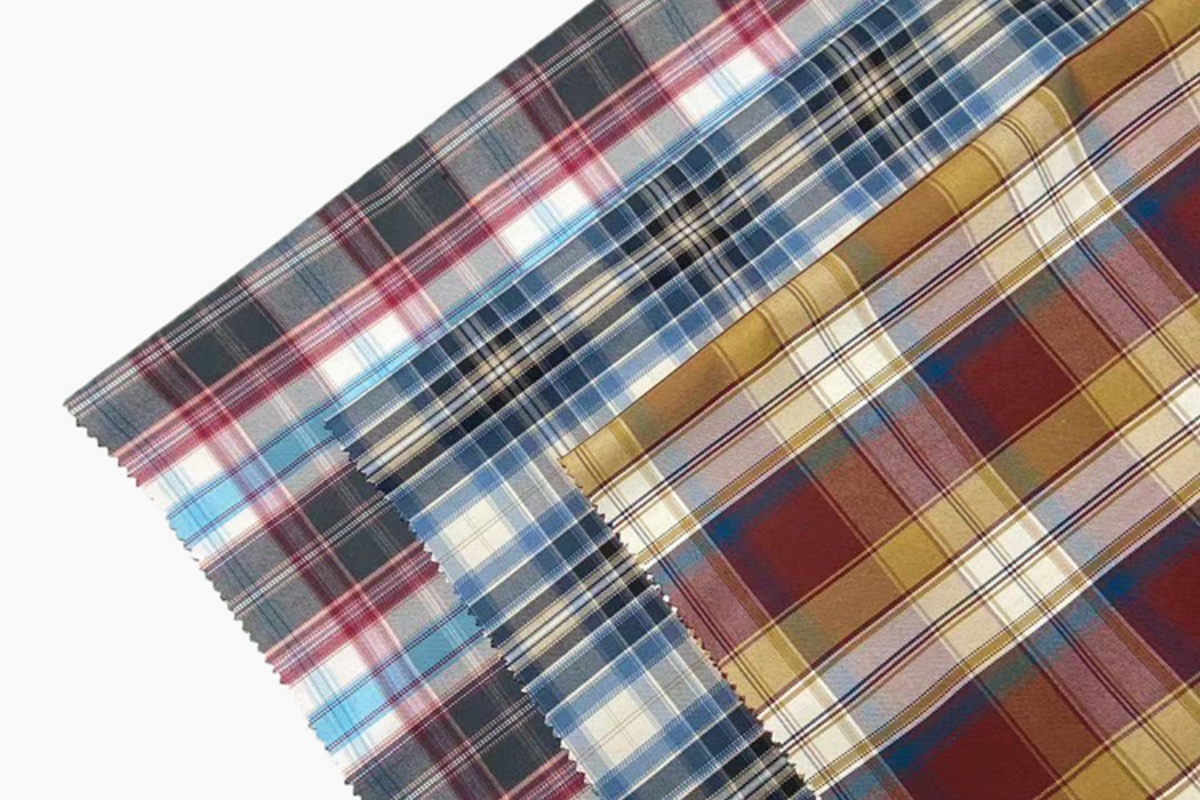
How to Frame Yarn-Dyed Plaid School Uniform Fabric
Specifying yarn-dyed plaid school uniform fabric requires a precise balance of durability, visual consistency, and cost-efficiency. Unlike printed alternatives, yarn-dyed constructions embed the pattern directly into the woven structure, ensuring the fabric remains vibrant across multiple academic years. Establishing the right technical parameters early in the development phase prevents costly bulk rejections and ensures the final garment withstands the rigors of daily student use.
What Defines Yarn-Dyed Plaid Construction
The defining characteristic of plaid yarn dyed fabric is that individual yarns are dyed in vats prior to the weaving process. This structural integration means the plaid pattern is visible on both the face and the reverse side of the textile, a crucial aesthetic feature for unlined uniform skirts and kilts. Depending on the fiber composition, manufacturers utilize a combination of disperse dyes for synthetics and reactive dyes for natural or cellulosic fibers to achieve maximum color penetration.
From a performance standpoint, this method yields superior colorfastness compared to piece-dyed or printed fabrics. Industry standards dictate a minimum colorfastness to washing (ISO 105-C06) of Grade 4, and colorfastness to light (ISO 105-B02) of Grade 4 or higher. These stringent metrics ensure the uniform will not degrade, fade, or bleed onto adjacent lighter fabrics after repeated industrial or domestic laundering cycles.
Which Requirements to Confirm First
Before initiating any sampling with a mill, establish the baseline physical requirements: fabric weight, cuttable width, yarn count, and Minimum Order Quantity (MOQ). For standard uniform skirts or trousers, target a fabric weight between 200 GSM and 240 GSM using 32s/2 or 40s/2 plied yarns, which provides optimal opacity, structural stability, and drape. The standard cuttable width should be confirmed at 57/58 inches to maximize marker efficiency during garment cutting.
Because yarn dyeing requires specific vat sizes for each individual color component in the plaid pattern, MOQs are significantly higher than those for piece-dyed solid fabrics. Expect custom yarn-dyed patterns to require an MOQ ranging from 1,500 to 3,000 meters per colorway. If procurement volume falls below this threshold, buyers must either negotiate less-than-minimum (LTM) surcharges or select from the manufacturer’s library of available stock-dyed yarns to bypass the custom dyeing vats. Note that many smaller uniform suppliers cannot absorb LTM costs, making stock-dyed alternatives the most realistic option for low-volume orders. Additionally, be aware of regional cost variability; pricing standards fluctuate significantly based on the manufacturing region’s labor and utility costs.
Fiber and Weave Options for Yarn-Dyed Plaid
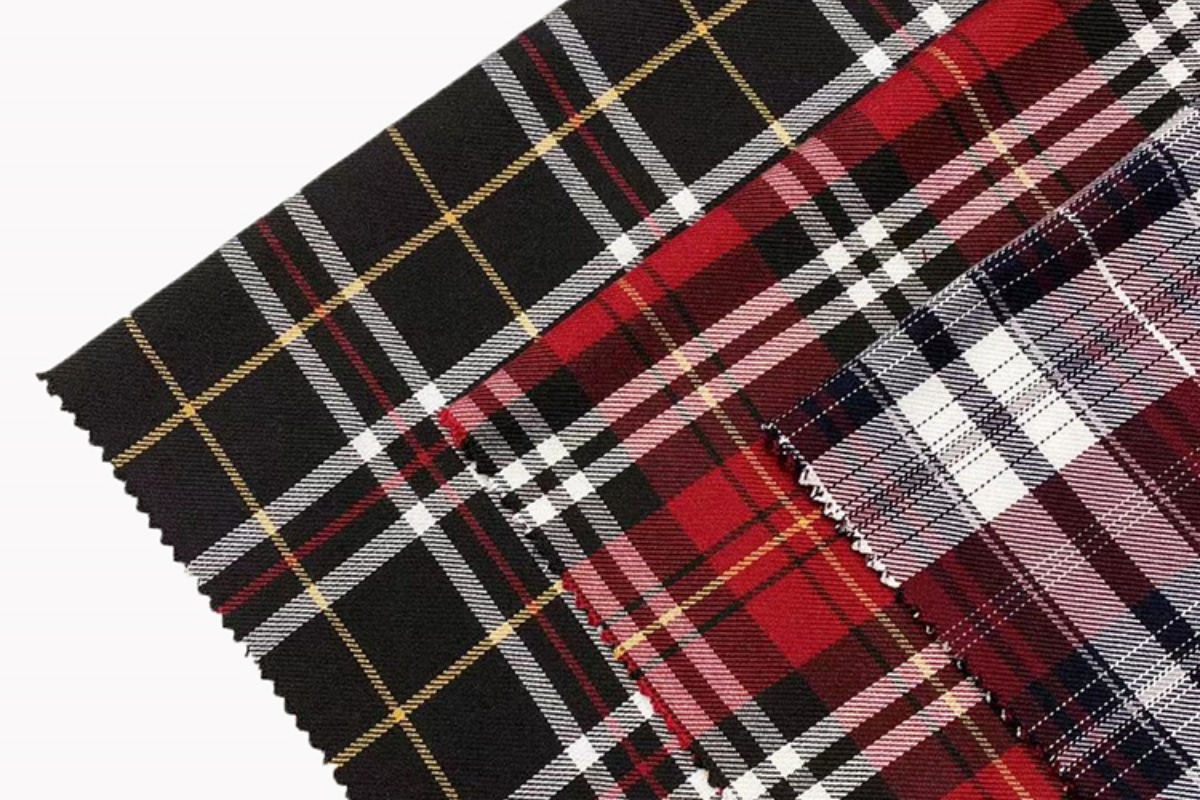
Selecting the correct fiber composition and weave structure dictates not only the garment’s longevity but also its thermal comfort and manufacturing cost. Institutional buyers must carefully weigh the aesthetic and tactile benefits of cellulosic fibers like rayon against the sheer resilience and economic advantages of pure synthetic fibers.
How 65% Polyester 35% Rayon Compares with 100% Polyester
The debate between blended fibers and pure synthetics heavily influences the final garment price and daily performance. A 65%T 35%R yarn dyed plaid (Polyester/Rayon) is widely considered a premium standard for school uniforms, particularly for institutions with higher budget tiers. The 35% rayon content provides a wool-like hand feel, excellent breathability, and superior drape for pleated skirts. However, rayon requires careful anti-pilling finishing treatments to survive daily friction.
Conversely, a 100% poly yarn dyed fabric is highly cost-effective and exceptionally durable under standard wear. Pure polyester boasts high abrasion resistance and high-temperature crease retention, making it ideal for permanent pleats, albeit at the expense of moisture permeability and breathability.
| Feature | 65% Poly / 35% Rayon (TR) | 100% Polyester |
|---|---|---|
| Typical Weight | 210 – 240 GSM | 180 – 220 GSM |
| Pilling Resistance | ISO Grade 3.5-4 | ISO Grade 4-5 |
| Breathability | Moderate to High | Low |
| Pleat Retention | Good | Excellent |
| Relative Cost | Premium ($$) | Economical ($) |
When to Choose Twill or Plain Weave
The choice between a twill and a plain weave depends entirely on the intended garment type. Plain weaves—often lighter, ranging from 140 to 160 GSM—are typically specified strictly for summer uniform blouses or shirts. The simple one-over-one-under intersection creates a tighter, flatter, and cooler fabric.
However, for skirts, pinafores, and trousers, a 2/1 or 2/2 twill weave is highly recommended across most climates and wear frequencies. Twill constructions naturally pack more yarns per square inch, resulting in a heavier, more durable textile (typically 200+ GSM) that holds sharp pleats beautifully under high-temperature industrial pressing. The diagonal ribbing inherent in twill structures also masks daily wear, abrasion, and minor stains far better than a plain weave. It is standard practice to request a topical Teflon or fluorocarbon finish on these twill fabrics to add a durable water and stain repellent (DWR) layer, extending the garment’s wash lifecycle.
How to Source, Test, and Approve Yarn-Dyed Plaid
Transitioning from technical specifications to active procurement requires a rigorous testing and approval protocol. The sourcing phase must include strict milestones to ensure the mill can replicate approved CAD designs consistently across massive bulk yardages without shade variation. Buyers must also account for the risks of small-mill quality inconsistency, making supplier verification a critical step before placing bulk orders.
Key Approval Steps for Yarn-Dyed Plaid Fabric
The approval cycle for any TR yarn dyed fabric begins with lab dips for the individual yarns, which takes 3 to 5 days. Once the yarn colors are approved under a D65 light source, the mill weaves “handlooms”—small physical swatches created on manual looms to confirm the pattern scale, repeat size, and color interplay. Handloom production typically adds another 7 to 10 days to the timeline.
After visual layout approval, a sample yardage run should be authorized to conduct destructive physical testing. Standard protocols mandate that the fabric undergoes pilling resistance testing (ISO 12945-2) to achieve a minimum of Grade 3.5 at 2,000 rubs.
Key Takeaways
- Specify yarn-dyed plaid when the uniform needs a pattern visible on both sides and stronger resistance to fading than printed alternatives.
- Set core technical requirements early, including 200–240 GSM weight, 57/58-inch cuttable width, yarn count, and MOQ.
- Require ISO 105-C06 washing colorfastness Grade 4 and ISO 105-B02 light colorfastness Grade 4 or higher to reduce bulk quality risks.
- Plan for custom yarn-dyed plaid MOQs of about 1,500–3,000 meters per colorway because each color requires separate yarn dyeing.
- Use stock-dyed yarns or existing plaid patterns when order volume is too low to absorb less-than-minimum surcharges.
- Compare 65% polyester 35% rayon with 100% polyester based on hand feel, durability, comfort, and total uniform program cost.
Frequently Asked Questions
Why choose yarn-dyed plaid instead of printed plaid for school uniforms?
Yarn-dyed plaid is woven from pre-dyed yarns, so the pattern appears on both sides and resists fading better than surface prints. This is especially useful for skirts, kilts, and daily-wear uniforms.
What fabric weight is suitable for school uniform plaid fabric?
A practical target is 200–240 GSM. This range usually provides enough opacity, structure, and drape for school skirts and trousers without making the garment feel too heavy.
What colorfastness standard should buyers request?
Ask for washing colorfastness to ISO 105-C06 Grade 4 and light colorfastness to ISO 105-B02 Grade 4 or higher. These benchmarks help reduce fading, bleeding, and shade complaints.
What cuttable width should be confirmed before ordering?
Confirm a cuttable width of 57/58 inches where possible. This helps improve marker efficiency, reduce fabric waste, and keep garment production costs under control.
What MOQ is typical for custom yarn-dyed plaid fabric?
Custom colorways often require 1,500–3,000 meters because each yarn color must be dyed separately. For smaller orders, stock-dyed yarns or available plaid designs may be more cost-effective.
Yunai Textile
Post time: Jun-26-2026